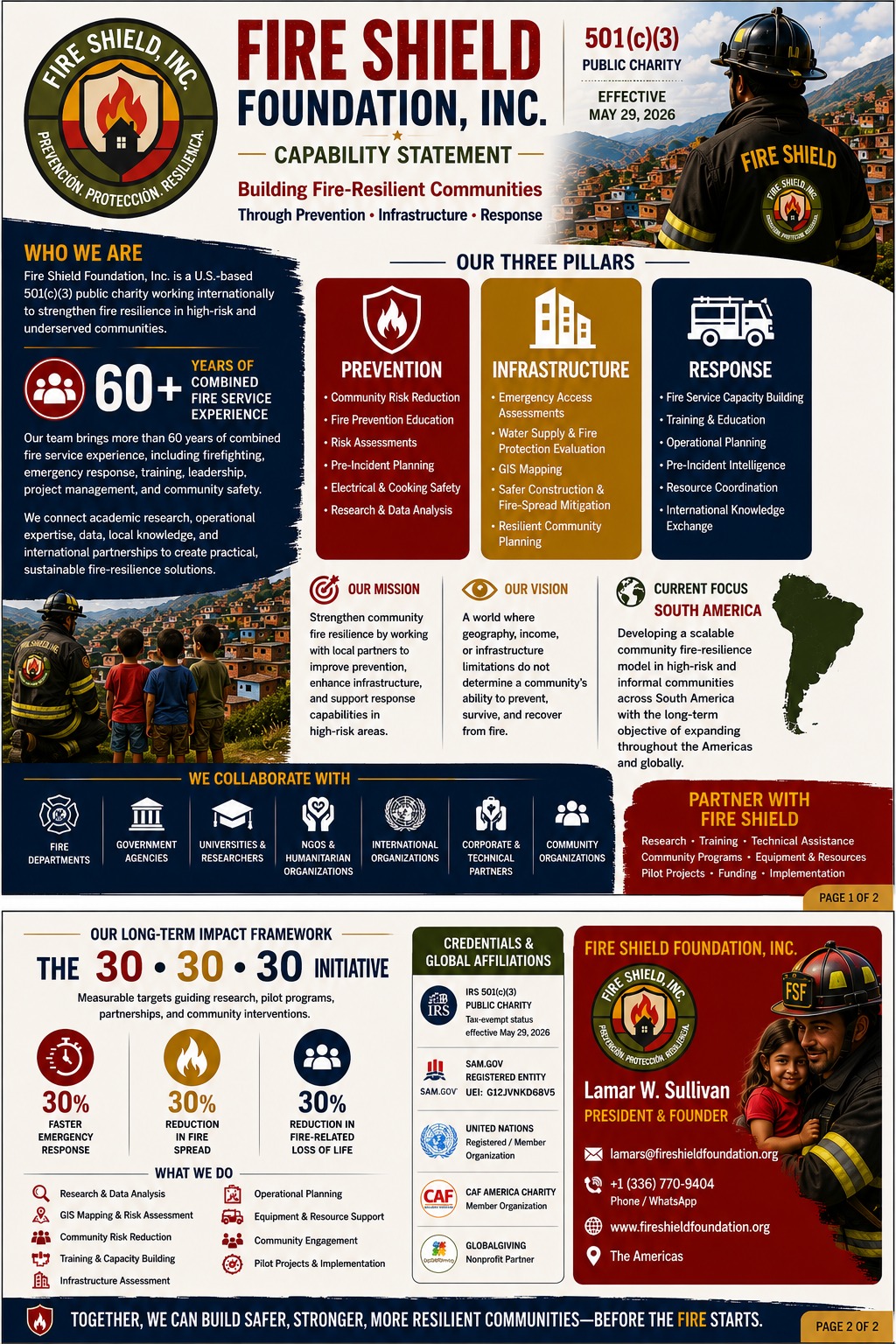
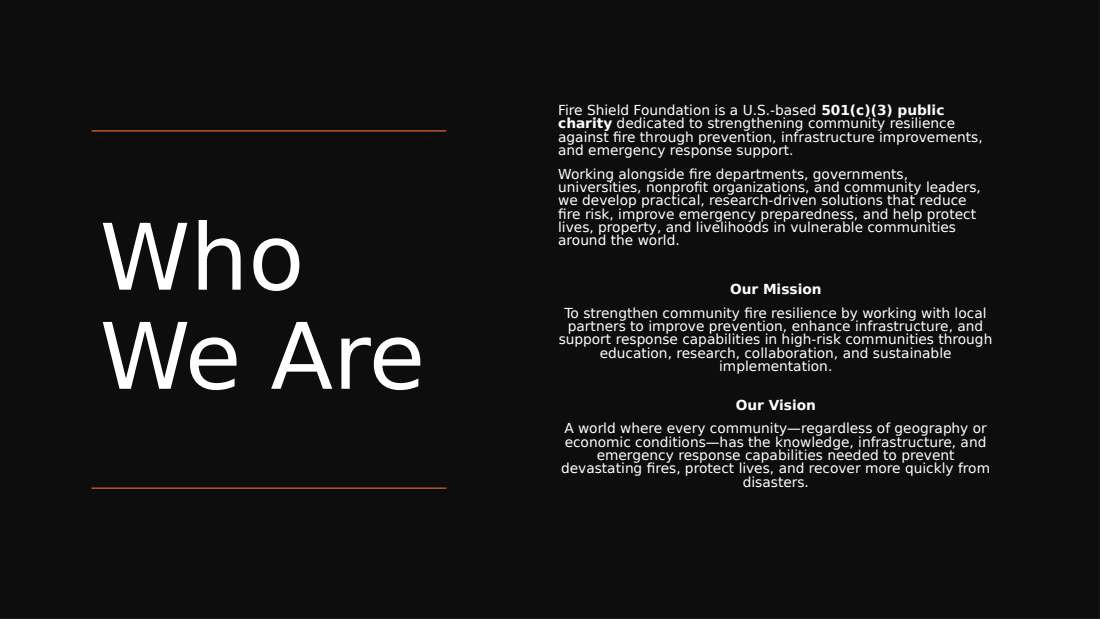
Fire Shield Foundation
Building Fire-Resilient Communities

Documents
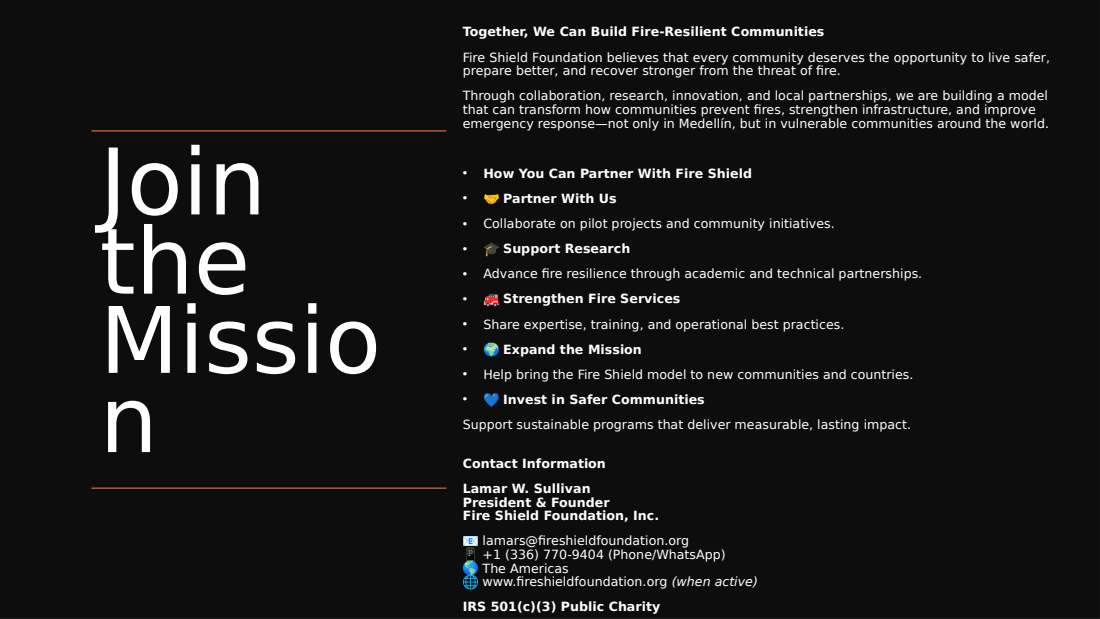
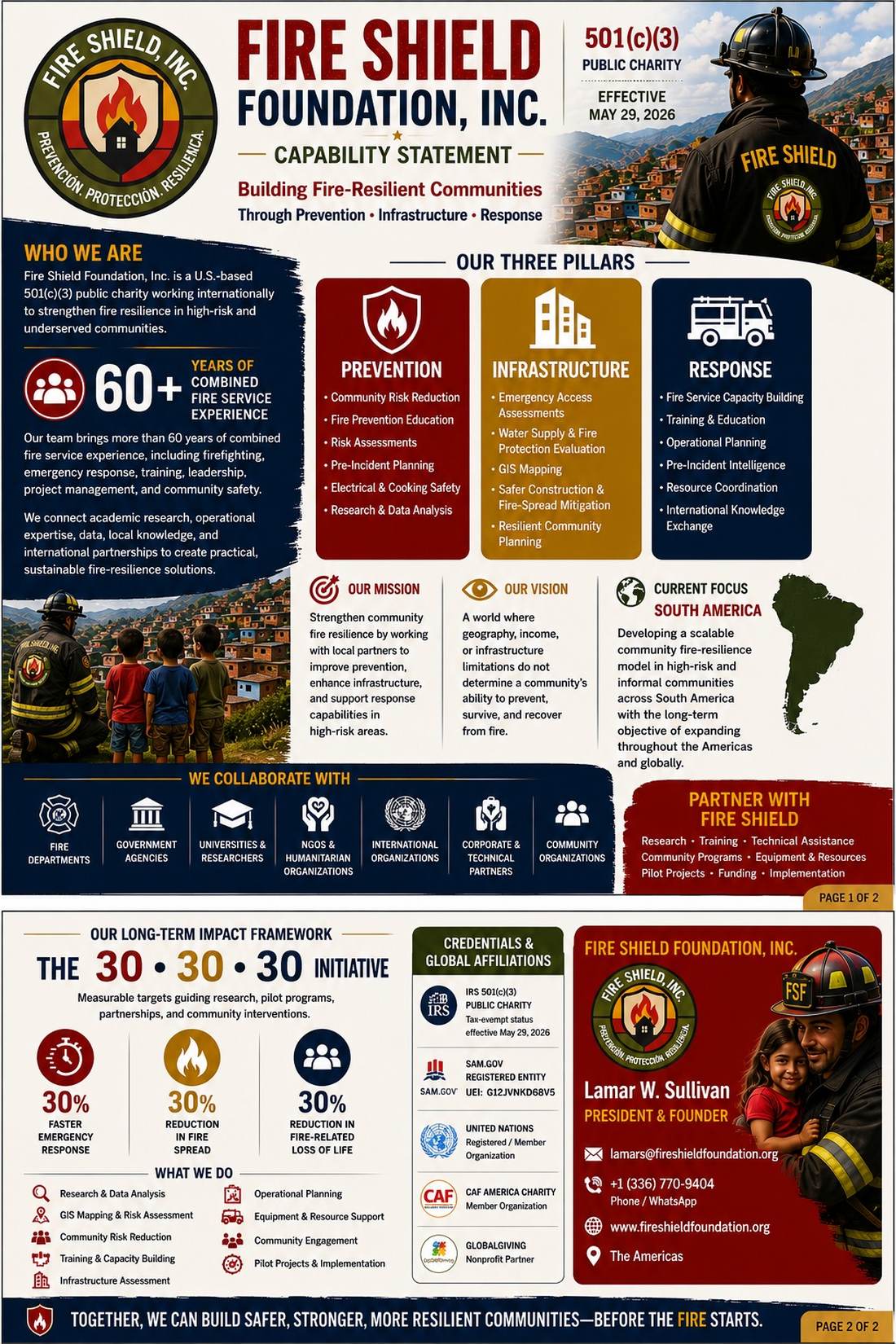
The research behind the figures, the foundation overview, and the Water Shield program proposal. Read them here or download the files.
Fire Shield Foundation
Fire Shield Foundation
Research we build on
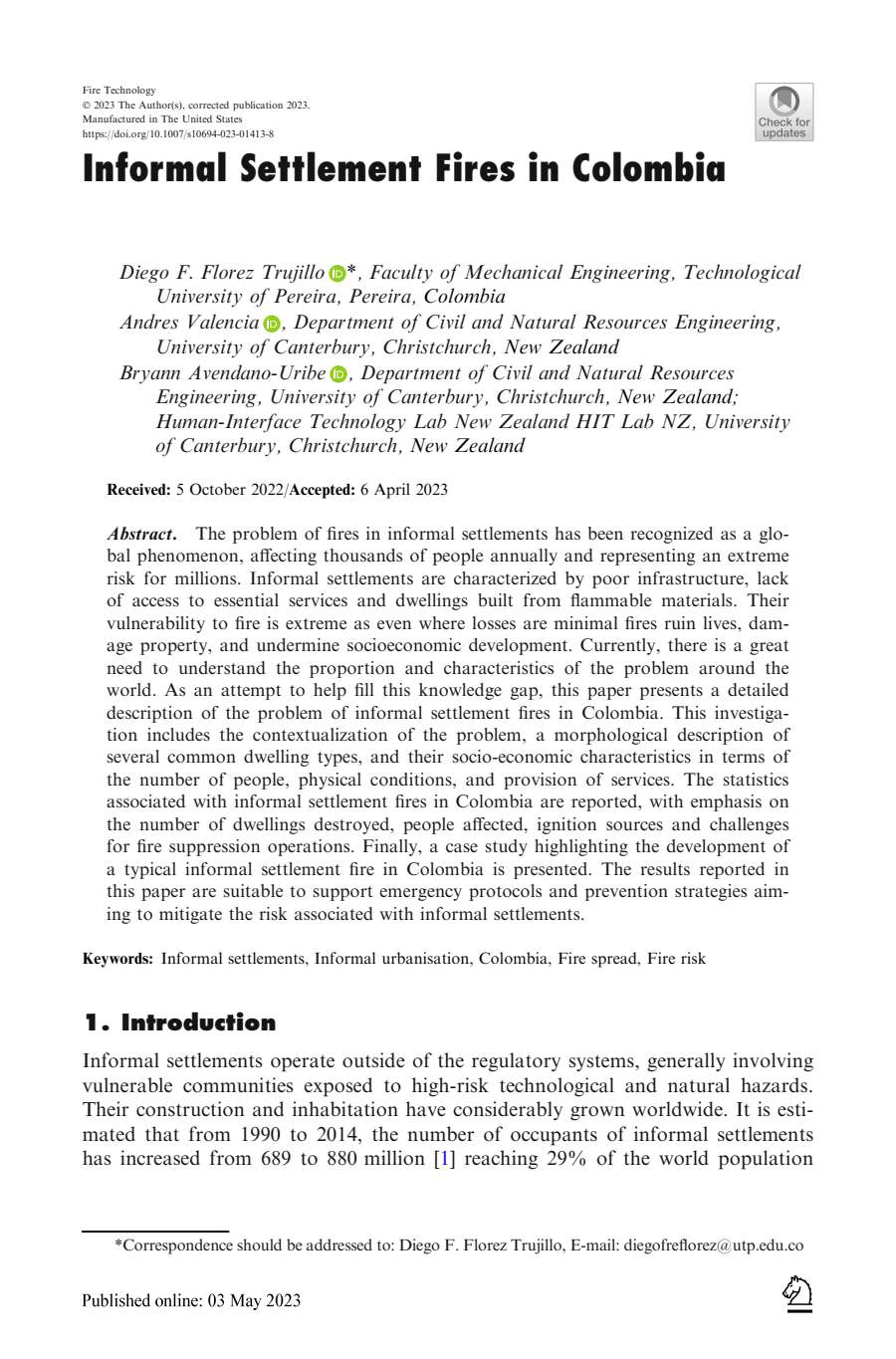
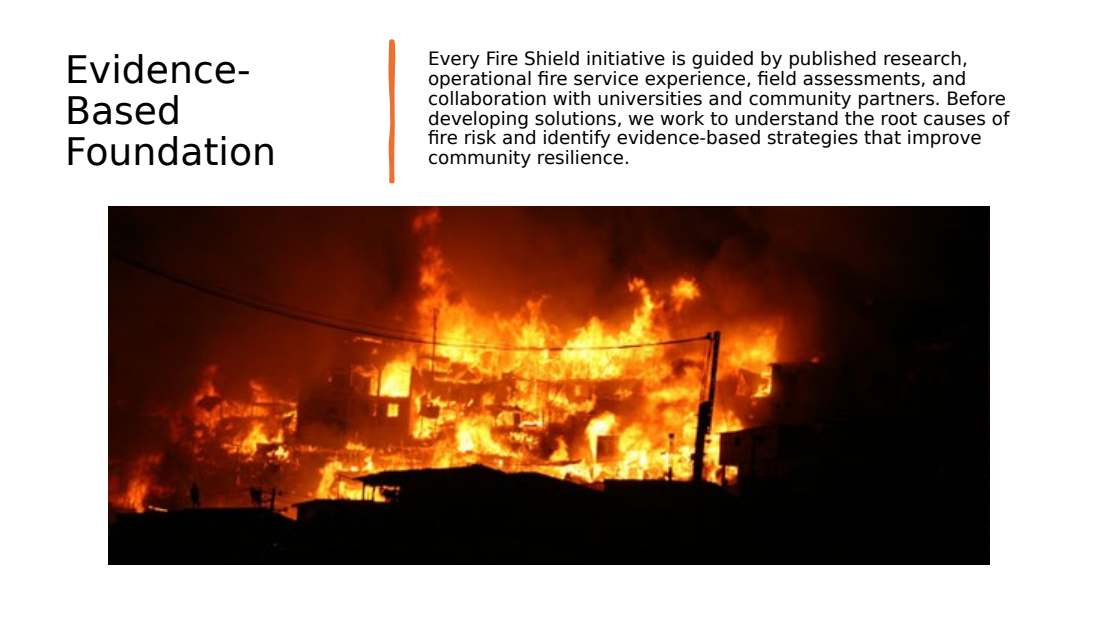
The problem of fires in informal settlements has been recognized as a global phenomenon, affecting thousands of people annually and representing an extreme risk for millions. Informal settlements are characterized by poor infrastructure, lack of access to essential services and dwellings built from flammable materials. Their vulnerability to fire is extreme as even where losses are minimal fires ruin lives, damage property, and undermine socioeconomic development. Currently, there is a great need to understand the proportion and characteristics of the problem around the world. As an attempt to help fill this knowledge gap, this paper presents a detailed description of the problem of informal settlement fires in Colombia. This investigation includes the contextualization of the problem, a morphological description of several common dwelling types, and their socio-economic characteristics in terms of the number of people, physical conditions, and provision of services. The statistics associated with informal settlement fires in Colombia are reported, with emphasis on the number of dwellings destroyed, people affected, ignition sources and challenges for fire suppression operations. Finally, a case study highlighting the development of a typical informal settlement fire in Colombia is presented. The results reported in this paper are suitable to support emergency protocols and prevention strategies aiming to mitigate the risk associated with informal settlements.
Read the full paper at the publisher →
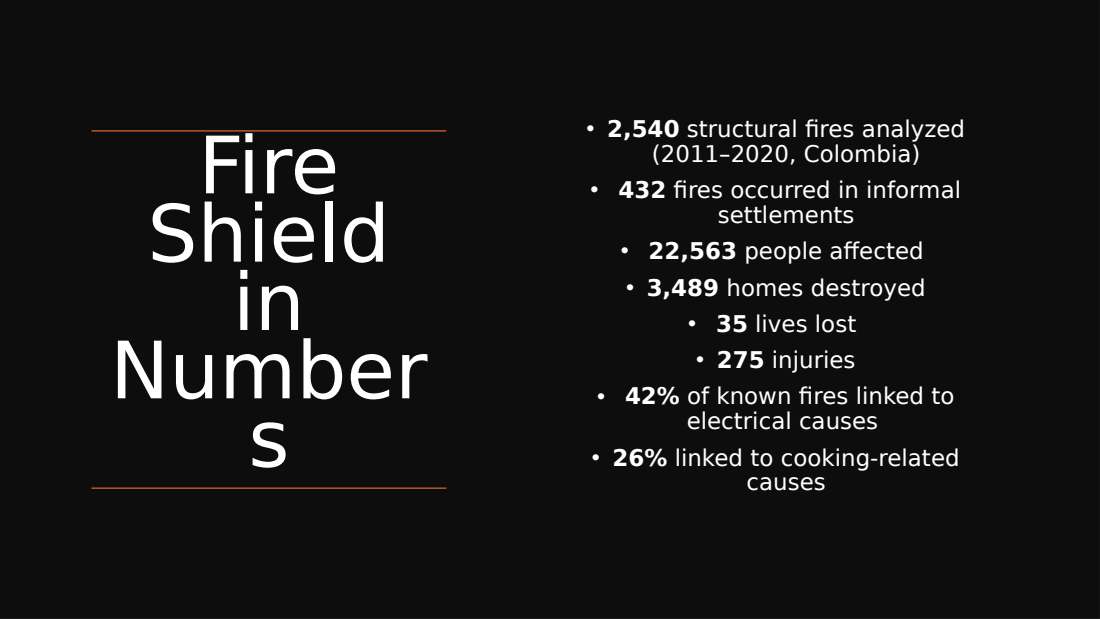
doi:10.1007/s10694-023-01413-8. Every headline figure on the Fire Shield site comes from this paper: 2,540 structural fires in Colombia 2011 to 2020, 432 in informal settlements, 22,563 people affected, 3,489 dwellings destroyed, 35 killed, 275 injured, and 88.5 percent of causes undetermined. Citing published research implies no endorsement by the authors or their institutions.
Research we build on
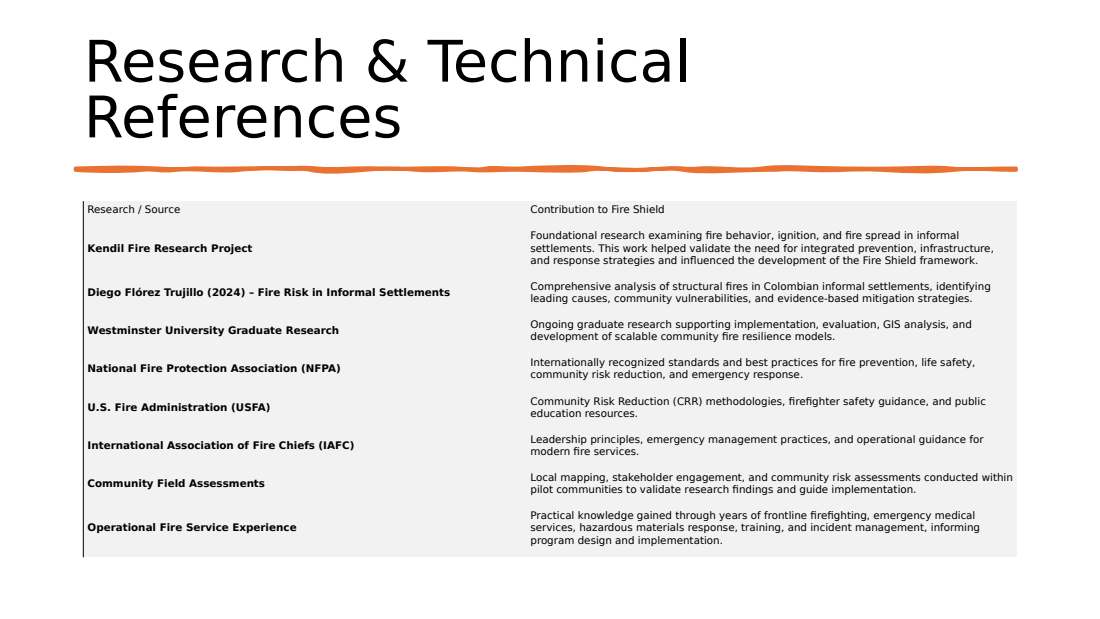
This 2024 master's thesis by Diego Fernando Flórez Trujillo may be one of the most important pieces of fire research currently available for Fire Shield's work in Colombia. Unlike many studies that focus on developed urban environments, this research examines fires in informal settlements—the exact type of communities Fire Shield is concerned with. The study combines Colombian fire history, disaster data, field observations, and advanced computer fire modeling to understand how fires start, spread, and destroy homes in informal communities.
The author begins with a simple but important observation: roughly one billion people worldwide live in informal settlements, and many of these communities are highly vulnerable to fire due to poor infrastructure, limited access to water, combustible building materials, overcrowding, and difficult access for emergency responders. While fire deaths have generally decreased in wealthier countries, they continue to rise in many parts of the developing world. Colombia is not immune to this problem.
One of the most valuable parts of this research is that it focuses specifically on Colombia rather than relying on studies from Africa, Asia, or Europe.
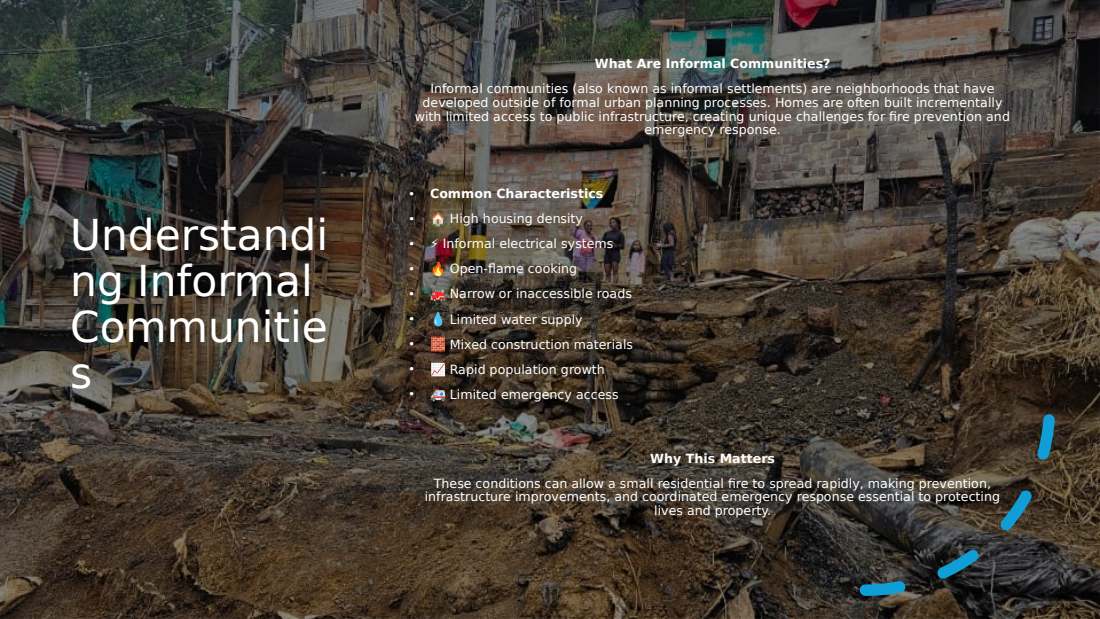
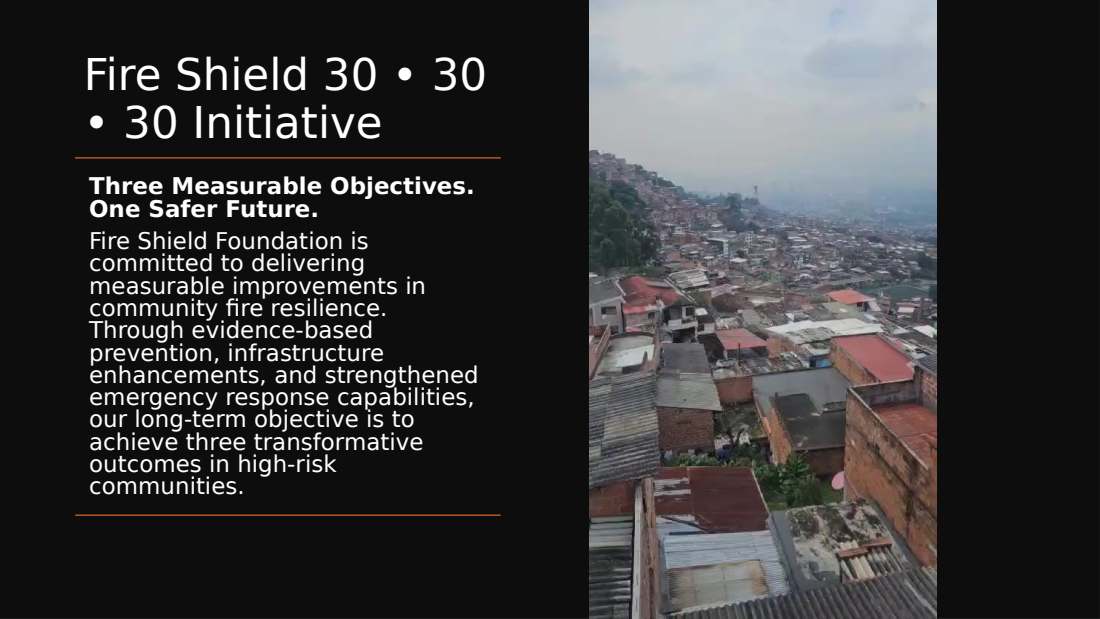
The author explains that informal settlements exist throughout Colombia and are often built on hillsides, flood-prone areas, unstable slopes, and land where formal development was never intended. Homes are commonly constructed from whatever materials are available, including:
Many communities have narrow pathways that prevent easy access by fire apparatus. Water supply can be limited, and electrical systems are often informal or improvised.
As I read this section, I immediately thought about many of the neighborhoods Fire Shield intends to assess around Medellín. The challenges described by the author mirror the same conditions we have discussed:
The thesis identifies several factors that influence fire spread in informal settlements. The biggest factors are:
When homes are built very close together, flames and radiant heat can easily reach neighboring structures.
Combustible walls, roofs, and furnishings provide fuel for continued fire growth.
Wind can dramatically increase flame spread and carry embers into nearby structures.
Firefighters may be unable to position apparatus close enough to attack the fire effectively.
Without nearby hydrants or water sources, suppression efforts become slower and less effective.
These findings strongly support Fire Shield's emphasis on prevention and community risk reduction rather than relying solely on emergency response.
The author analyzed national data from the UNGRD (National Unit for Disaster Risk Management) and found that informal settlement fires occur throughout Colombia. One of the most concerning findings was that many incidents are poorly documented, and the actual magnitude of the problem is likely underreported.
A major challenge is that many fire causes are recorded as unknown or undetermined.
For Fire Shield, this means that part of our future work should focus on improving incident documentation and data collection. Without accurate data, it becomes difficult to identify trends and target prevention programs effectively.
One chapter examines a real informal settlement known as Puerto Rico in Colombia.
The study reconstructs how the fire moved through the community and identifies factors that likely contributed to rapid spread.
One important lesson is that the fire did not simply spread from house to house because structures were touching. Heat, flames, wind effects, and building arrangement all contributed to the progression of the event.
Fire spread is a community problem, not just a building problem.
The heart of the thesis is a detailed simulation using Fire Dynamics Simulator (FDS), one of the world's most respected fire modeling platforms used by researchers and engineers.
The author created a virtual informal Colombian home and then simulated a fire inside it.
The simulation was repeatedly tested and calibrated to ensure reliable results.
This is important because it moves the discussion beyond opinion and into measurable science.
Perhaps the most interesting finding for Fire Shield is the role of Guadua bamboo.
Many international studies focus on wooden structures, particularly research from South Africa. However, Colombian informal housing often incorporates Guadua, which behaves differently than traditional wood.
The author concludes that Colombia requires its own fire research and cannot simply rely on models developed elsewhere.
For Fire Shield, this means that local construction practices matter.
Solutions designed for Cape Town, Nairobi, or Manila may not fully apply to Medellín.
The study found that heat flux levels measured approximately one meter from doors and windows were high enough to ignite common materials located outside the structure.
This is a huge finding.
Most residents think fire spreads when flames physically touch another structure.
The simulation demonstrated that radiant heat alone may be sufficient to ignite nearby combustible materials.
A burning house may ignite another house without direct flame contact.
The simulation showed classic compartment fire behavior.
As temperatures increased, the fire transitioned toward flashover conditions. Following flashover, flames projected through openings such as doors and windows.
Once this occurred, the likelihood of fire spreading to nearby structures increased dramatically.
The author notes that during the fully developed stage of the fire, flame lengths exceeded the separation distance between nearby structures.
The houses were close enough that the flames could effectively reach neighboring homes.
This is one of the strongest scientific arguments for community fire breaks and improved spacing.
Although the thesis is not specifically about Medellín, many of the conditions are directly applicable.
The study repeatedly highlights concerns that align with what Fire Shield expects to encounter:
The findings suggest that even modest improvements could significantly reduce risk:
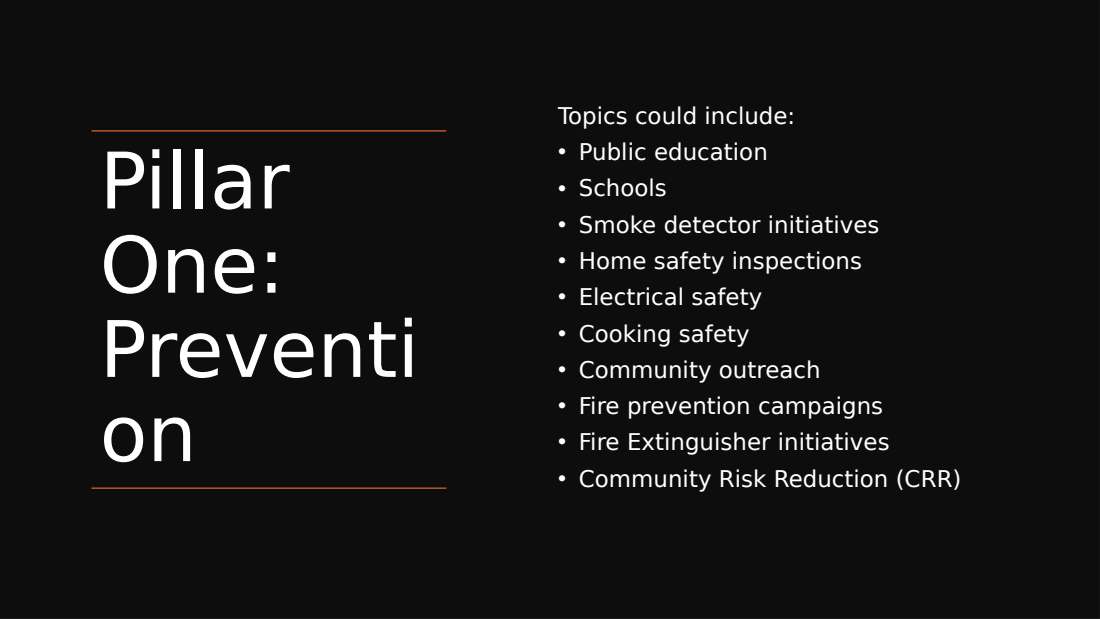
If Fire Shield were to turn this thesis into an operational roadmap, I would extract five priorities:
1. Mapping
2. Community Risk Assessments
3. Fire Prevention Education
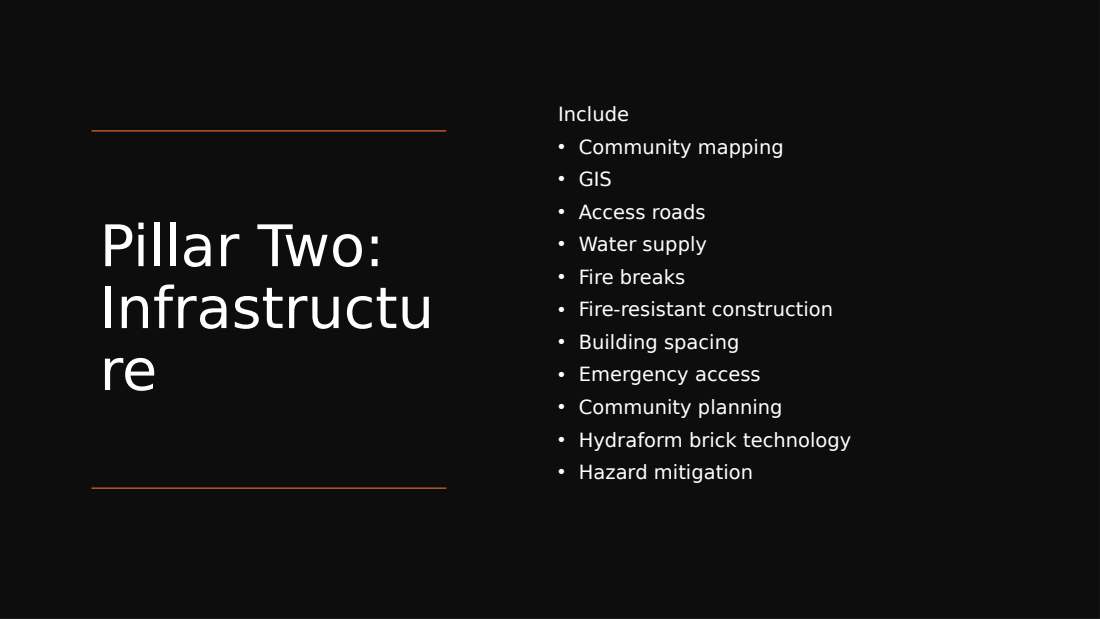
4. Infrastructure Improvements
5. Research Partnerships
The research confirms that informal settlement fires in Colombia are not random events. They follow identifiable patterns driven by building materials, settlement layout, spacing, heat transfer, and infrastructure limitations. These are factors that can be measured, mapped, and improved.
For Fire Shield, that is encouraging news. It means the problem is not simply "fires happen." It means there are practical interventions—many of them low-cost—that can reduce the likelihood of a single house fire becoming a community-wide disaster.
This is exactly the type of research that should help shape the Fire Shield Medellín Pilot Project.
Research we build on
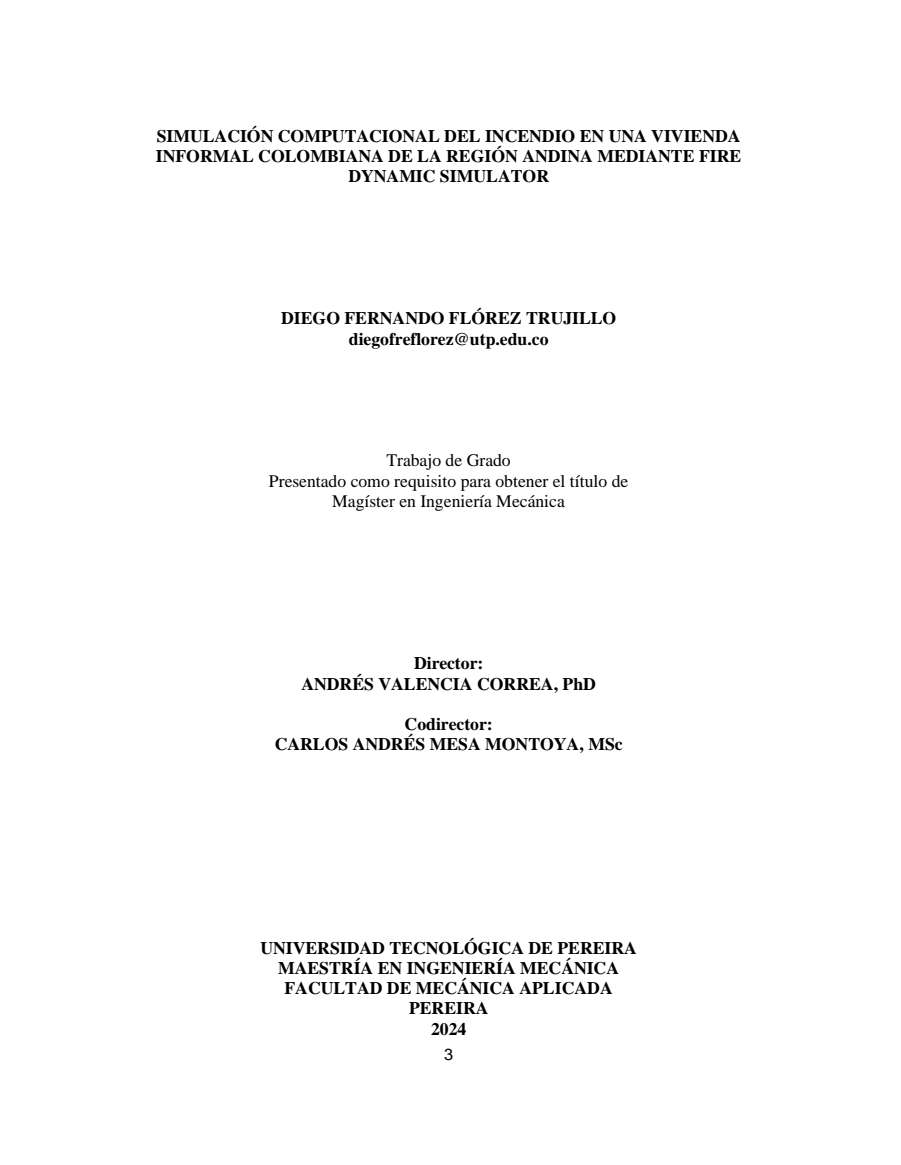
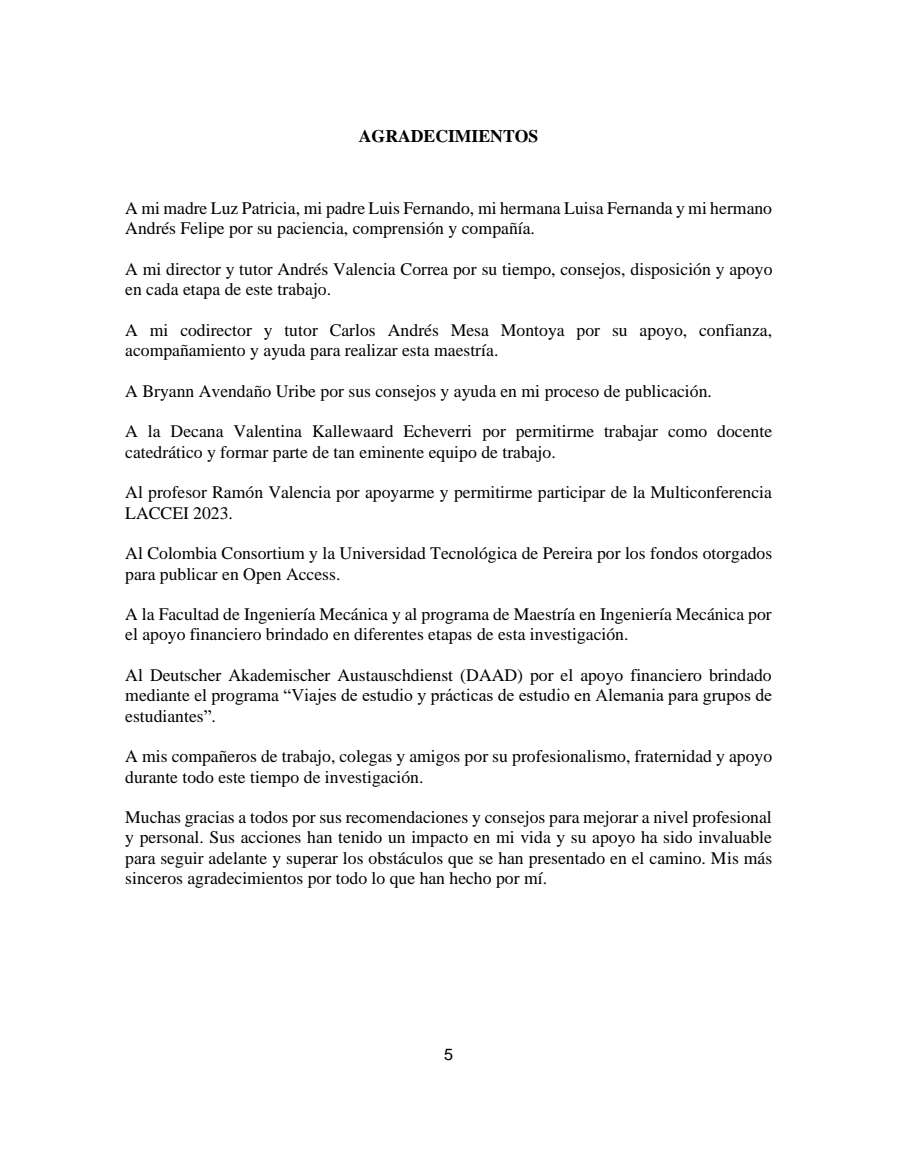
Cover and opening pages shown. The full thesis is held in the Universidad Tecnológica de Pereira institutional repository. Its computational model of fire growth inside a guadua and esterilla dwelling is the physical basis for how fast one ignition becomes a block.
Program proposal
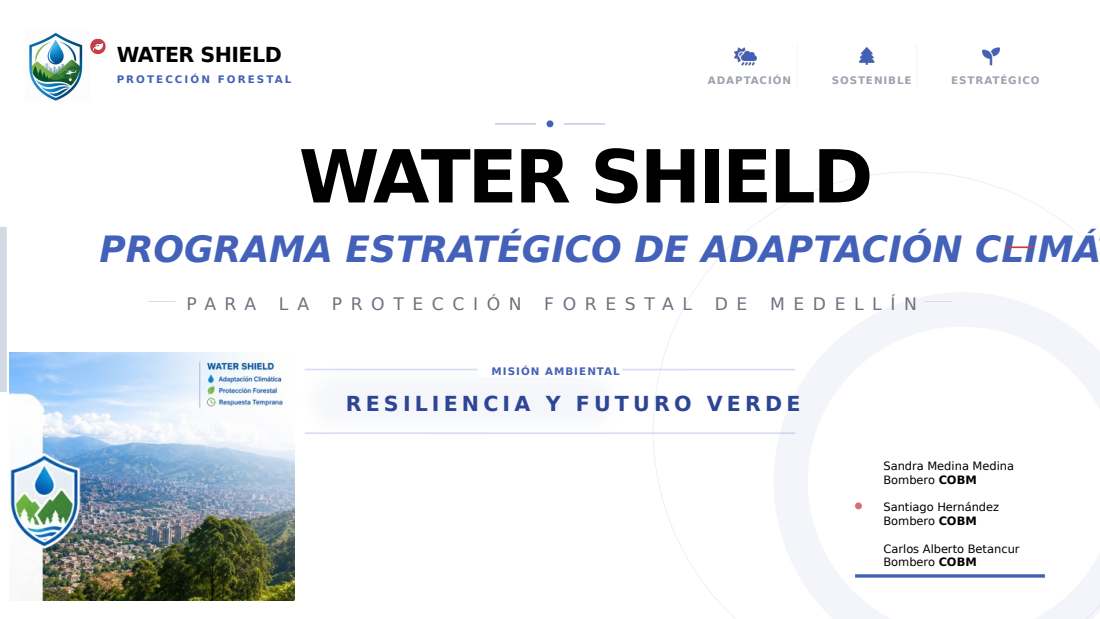
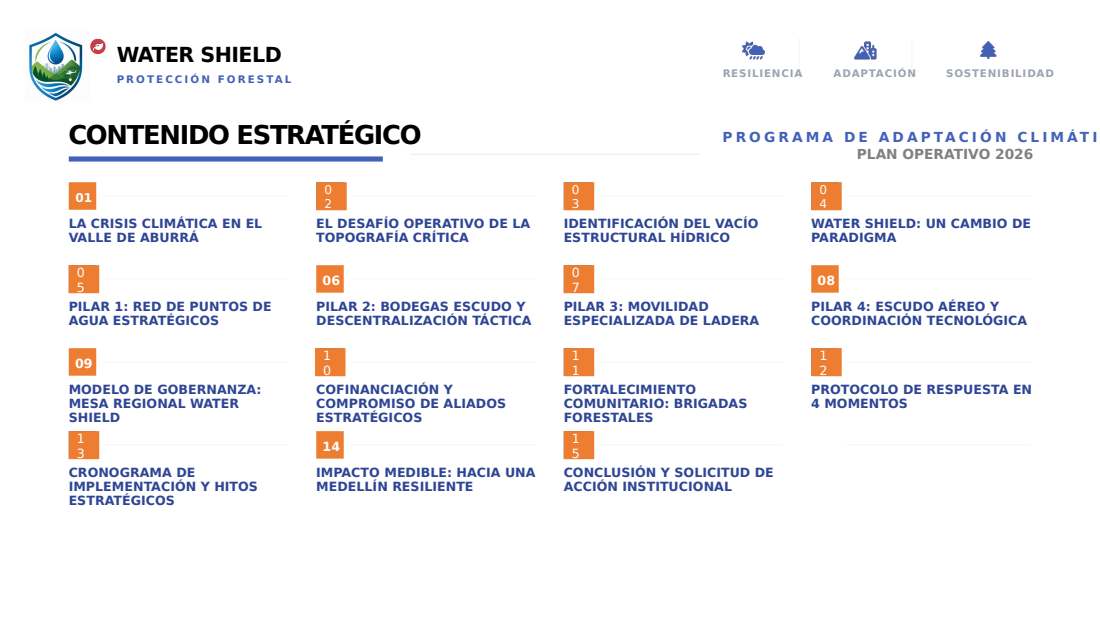
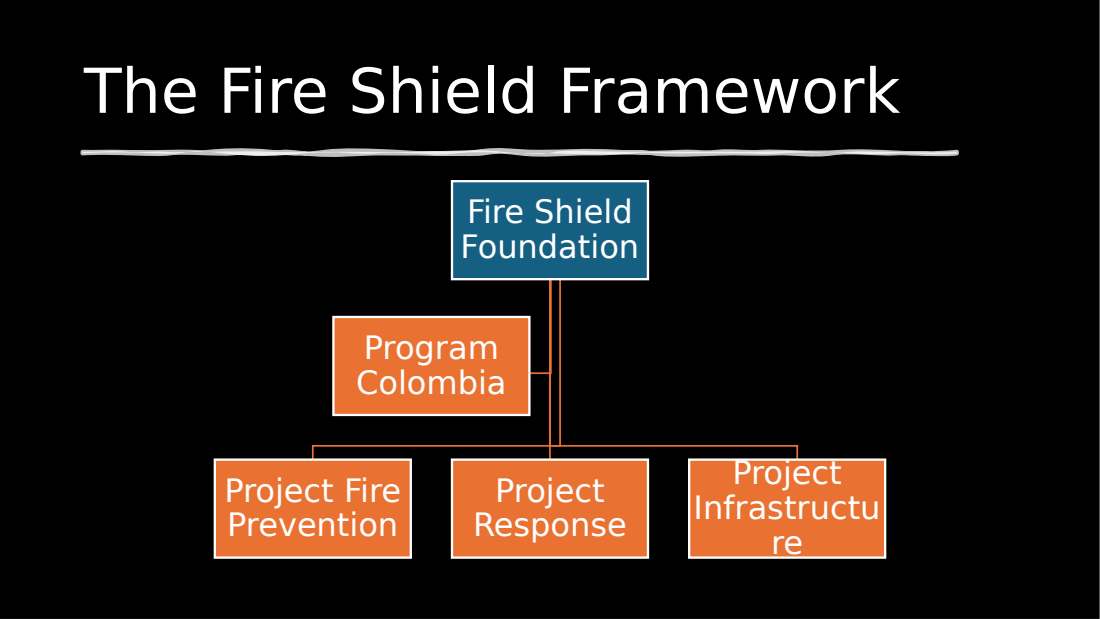
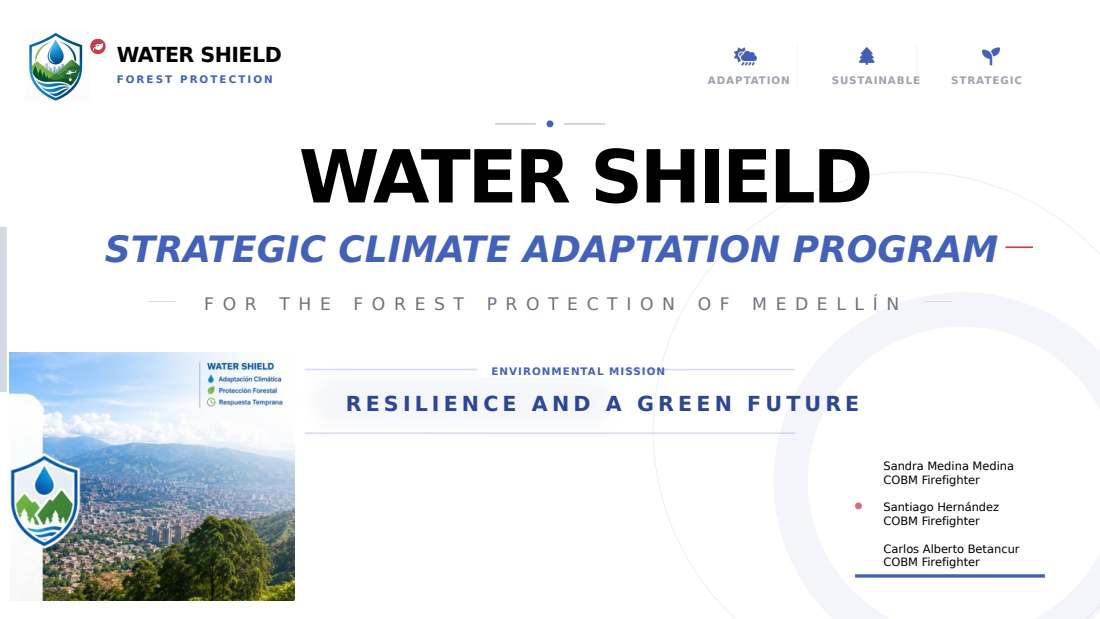
A program designed by firefighters of the Cuerpo Oficial de Bomberos de Medellín. Reproduced here as reference material. Fire Shield is in conversation with the program's authors about how the two efforts fit together; no formal partnership is implied. Author names appear only with their permission.
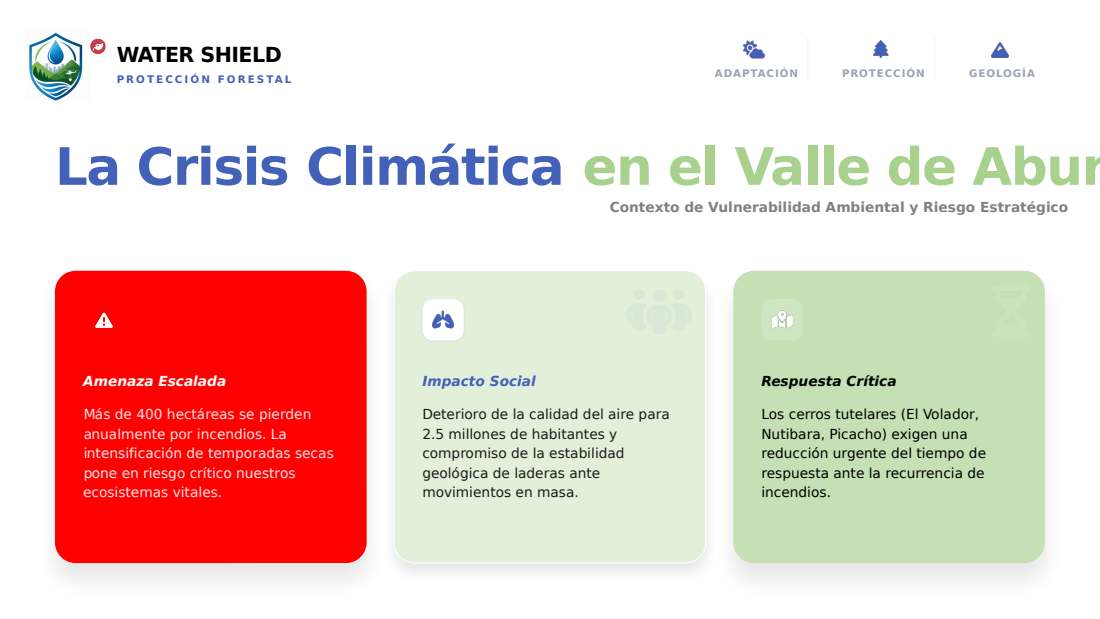
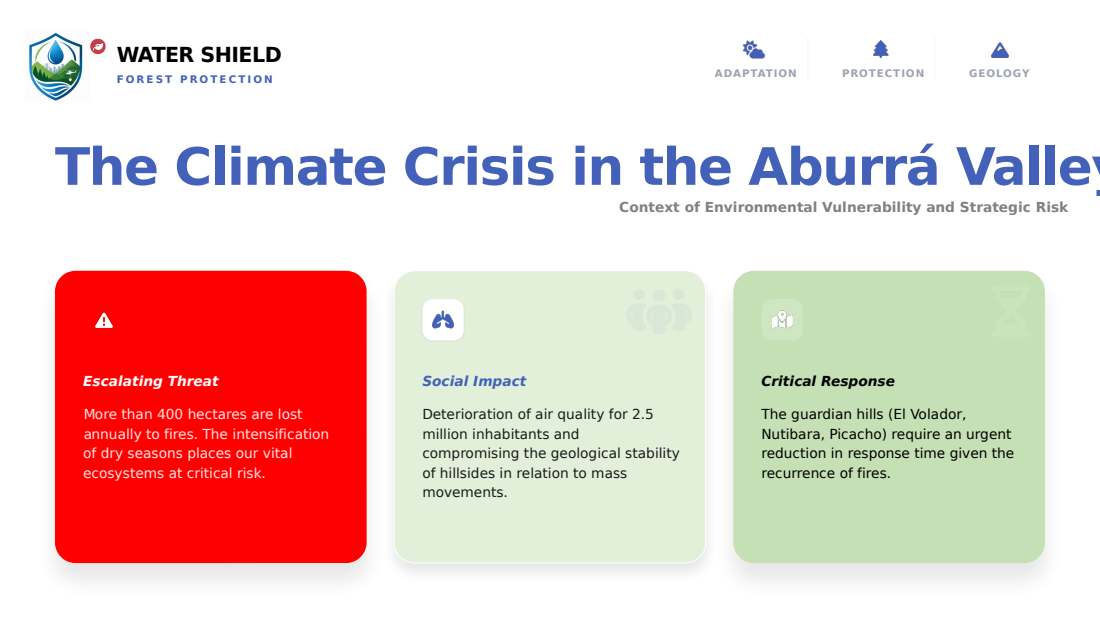
More than 400 hectares are lost annually to fires. The intensification of dry seasons places our vital ecosystems at critical risk.
Deterioration of air quality for 2.5 million inhabitants and compromising the geological stability of hillsides in relation to mass movements.
The guardian hills — El Volador, Nutibara, and Picacho — require an urgent reduction in response time given the recurrence of fires.
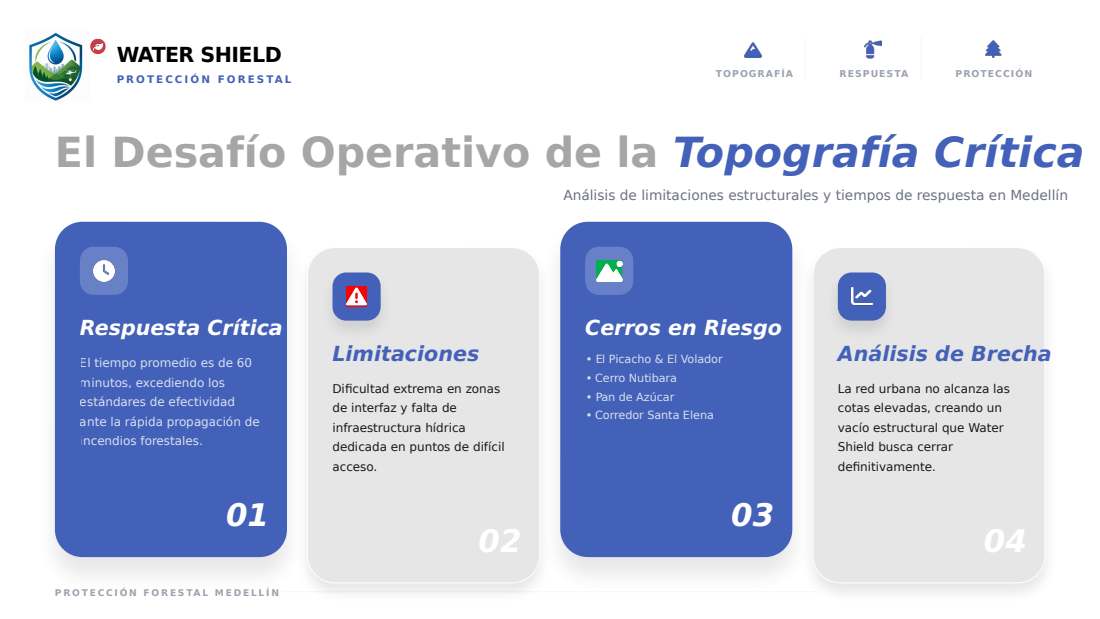
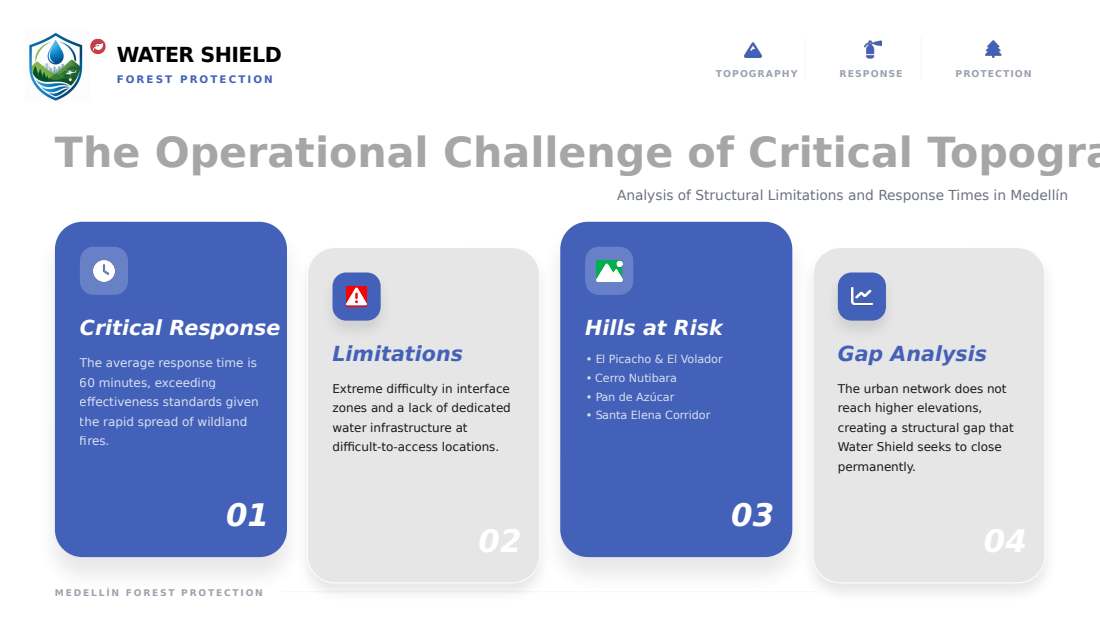
The average response time is 60 minutes, exceeding effectiveness standards given the rapid spread of wildland fires.
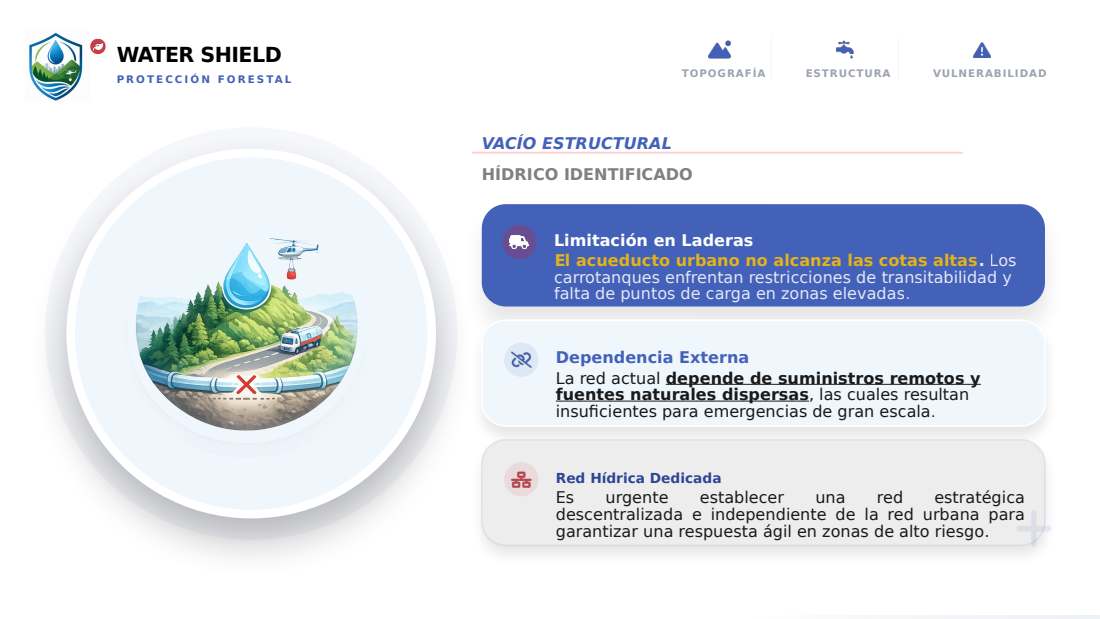
Extreme difficulty in interface zones and a lack of dedicated water infrastructure at difficult-to-access locations.
The urban network does not reach higher elevations, creating a structural gap that Water Shield seeks to close permanently.
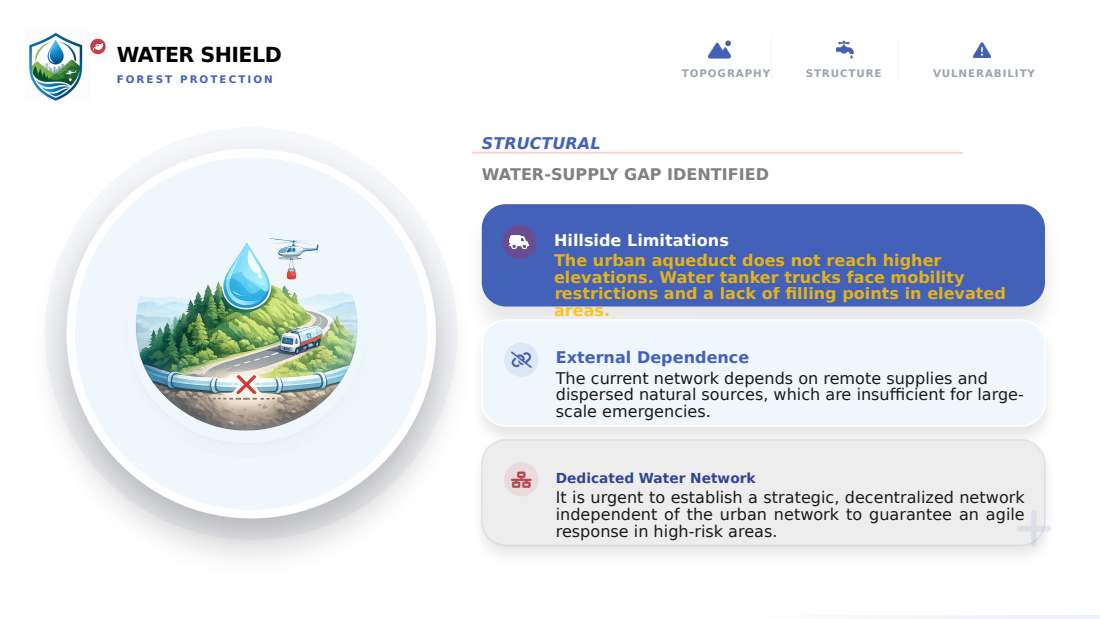
The urban aqueduct does not reach higher elevations. Water tanker trucks face mobility restrictions and a lack of filling points in elevated areas.
The current network depends on remote supplies and dispersed natural sources, which are insufficient for large-scale emergencies.
It is urgent to establish a strategic, decentralized network independent of the urban network to guarantee an agile response in high-risk areas.
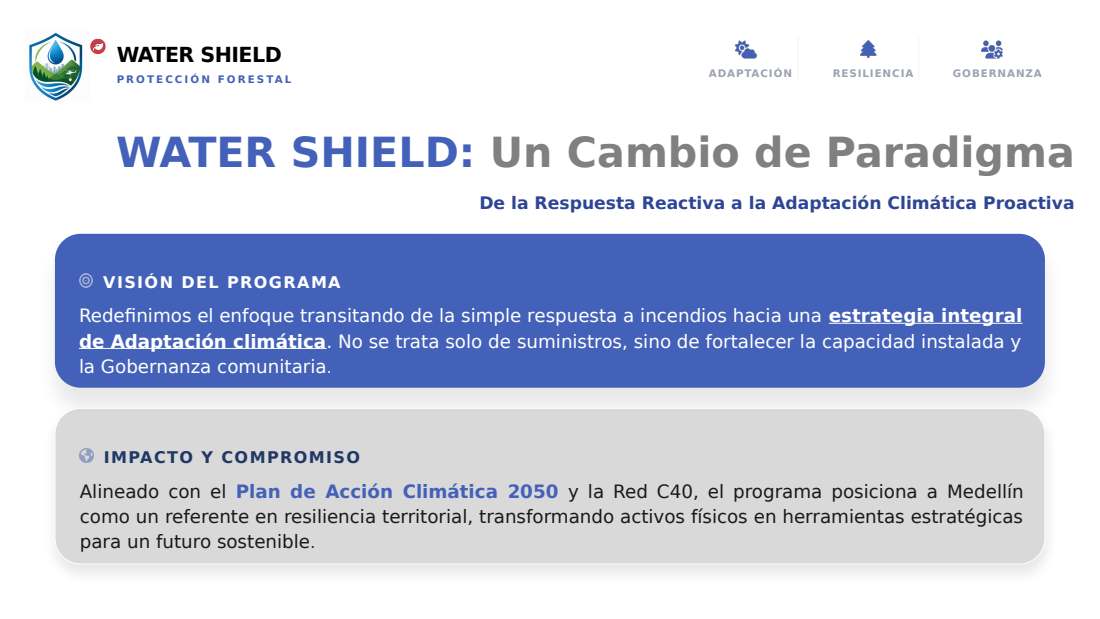
We redefine the approach by transitioning from simply responding to fires toward a comprehensive climate adaptation strategy.
It is not only about supplies, but about strengthening installed capacity and community governance.
Aligned with the 2050 Climate Action Plan and the C40 Network, the program positions Medellín as a benchmark in territorial resilience, transforming physical assets into strategic tools for a sustainable future.
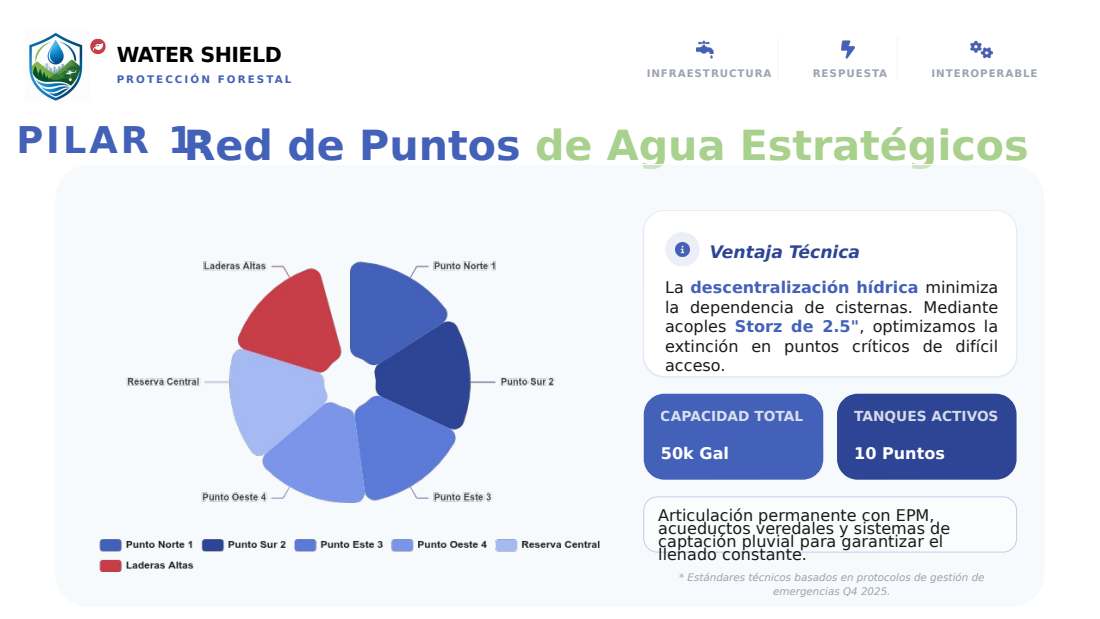
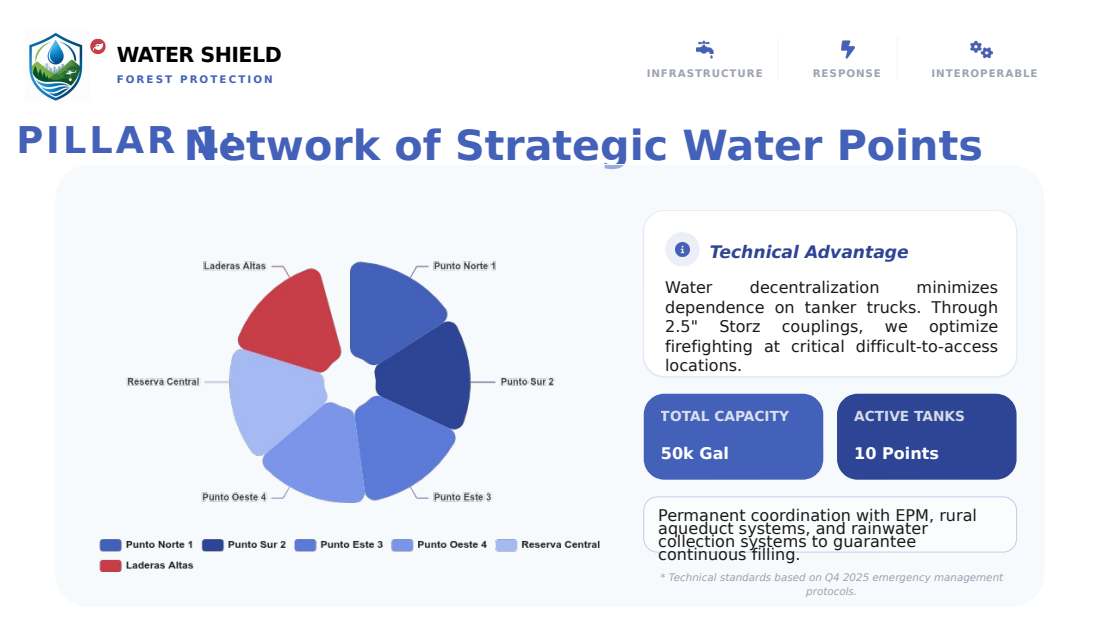
Water decentralization minimizes dependence on tanker trucks.
Through 2.5-inch Storz couplings, firefighting operations are optimized at critical locations that are difficult to access.
Permanent coordination with EPM, rural aqueduct systems, and rainwater collection systems to guarantee continuous filling.
Technical standards based on Q4 2025 emergency management protocols.
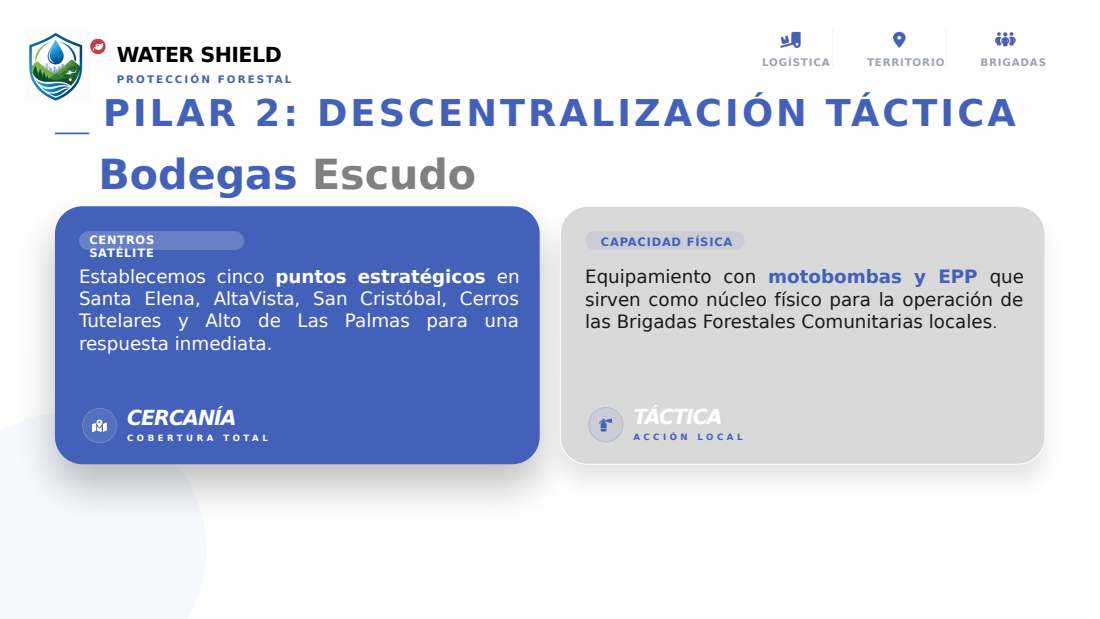
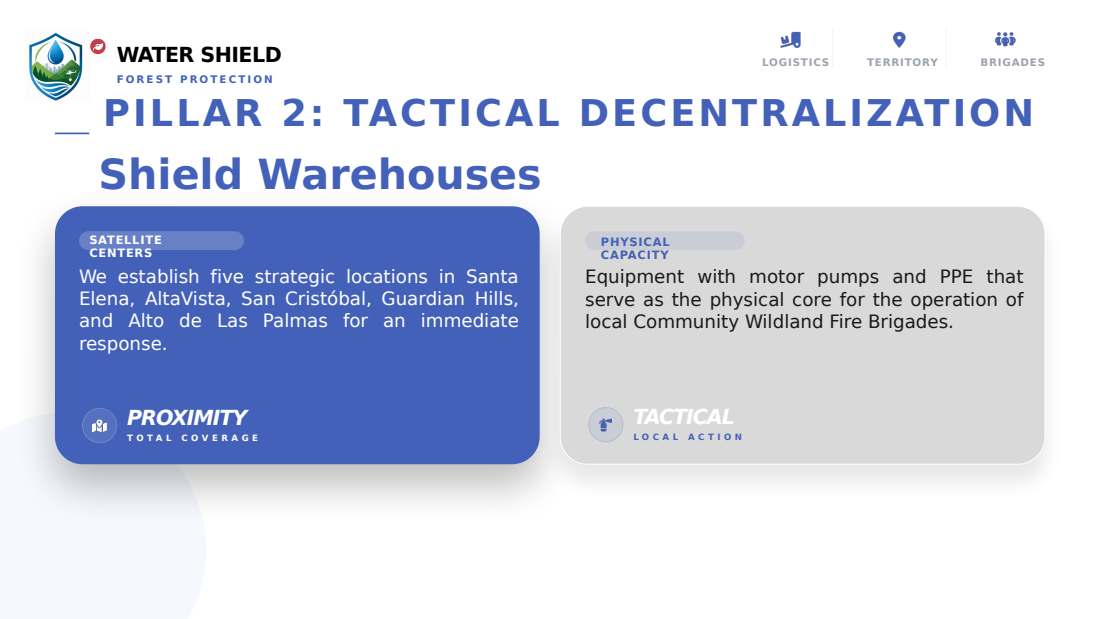
These locations are intended to provide an immediate response.
Equipment consisting of motor pumps and PPE will serve as the physical operational core for local Community Wildland Fire Brigades.
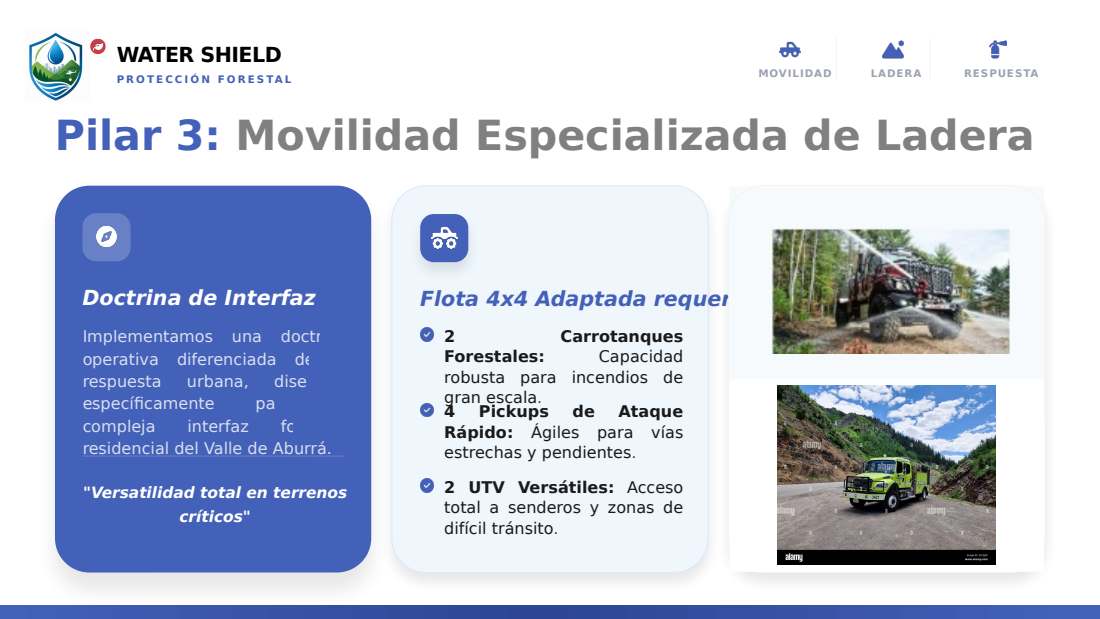
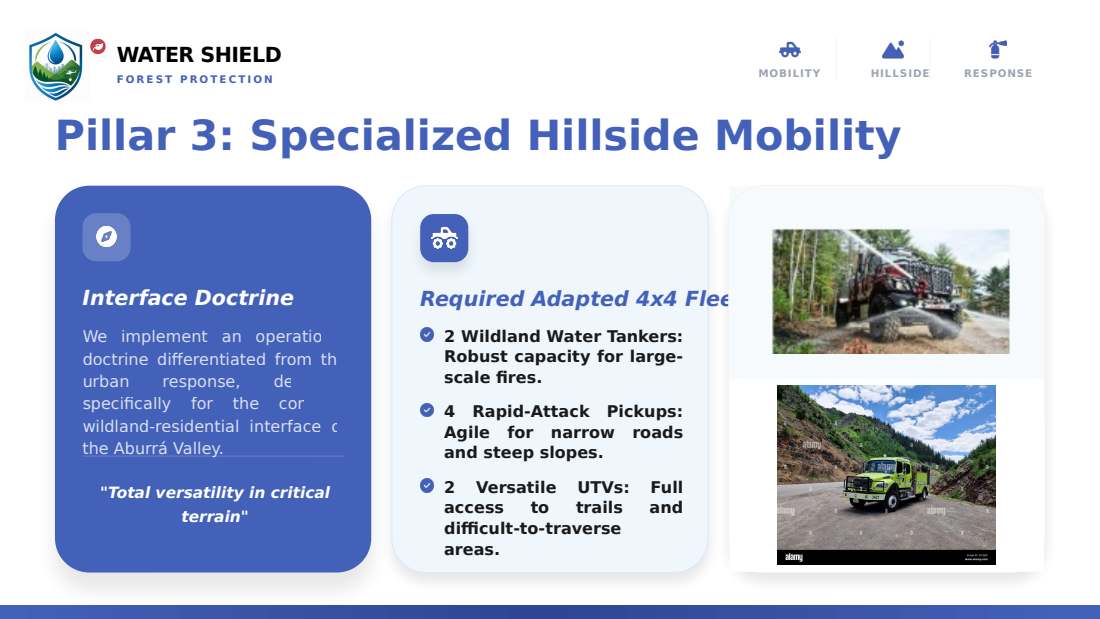
We implement an operational doctrine differentiated from the urban response and specifically designed for the complex wildland-residential interface of the Aburrá Valley.
"Total versatility in critical terrain."
2 Wildland Water Tankers: Robust capacity for large-scale fires.
4 Rapid-Attack Pickups: Agile vehicles for narrow roads and steep slopes.
2 Versatile UTVs: Full access to trails and difficult-to-traverse areas.
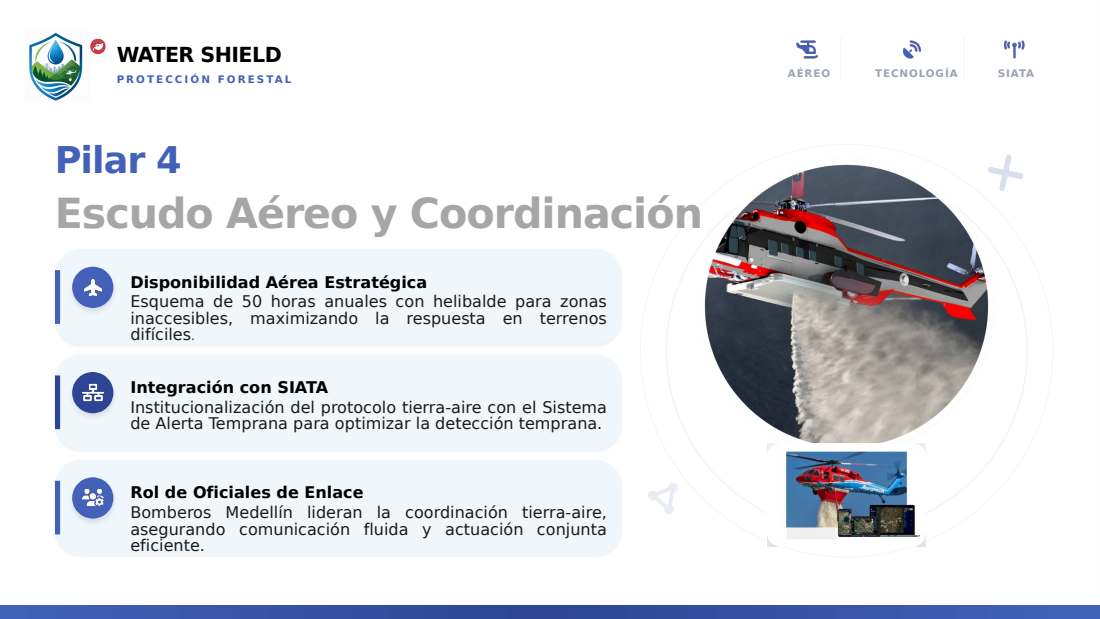
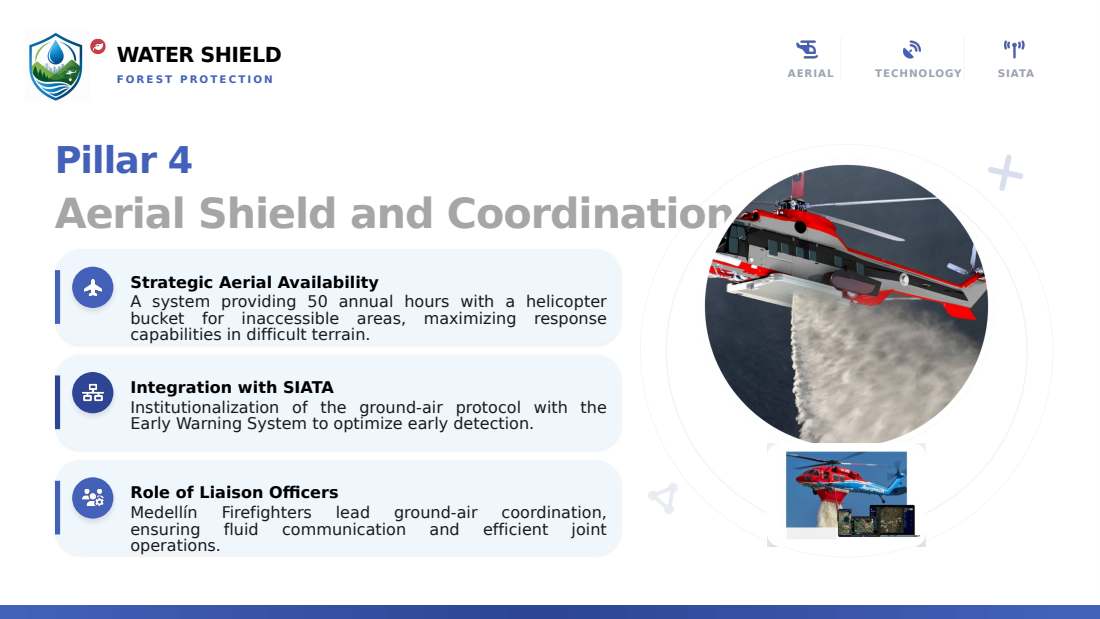
A system providing 50 annual hours with a helicopter bucket for inaccessible areas, maximizing response capabilities in difficult terrain.
Institutionalization of a ground-air protocol with the Early Warning System to optimize early detection.
Medellín Firefighters lead ground-air coordination, ensuring fluid communication and efficient joint operations.
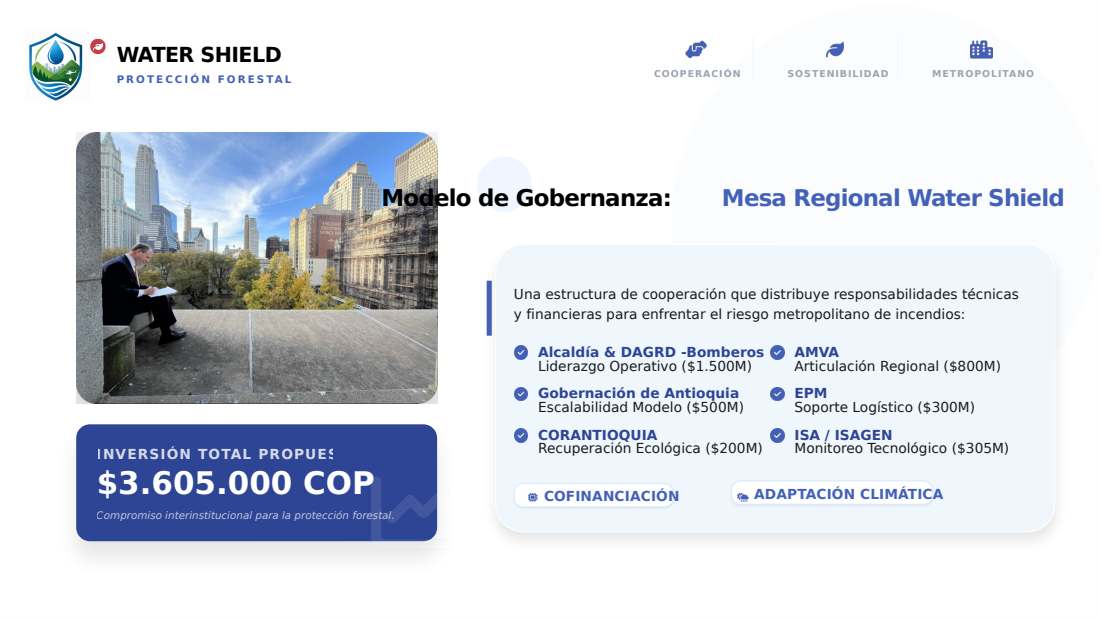
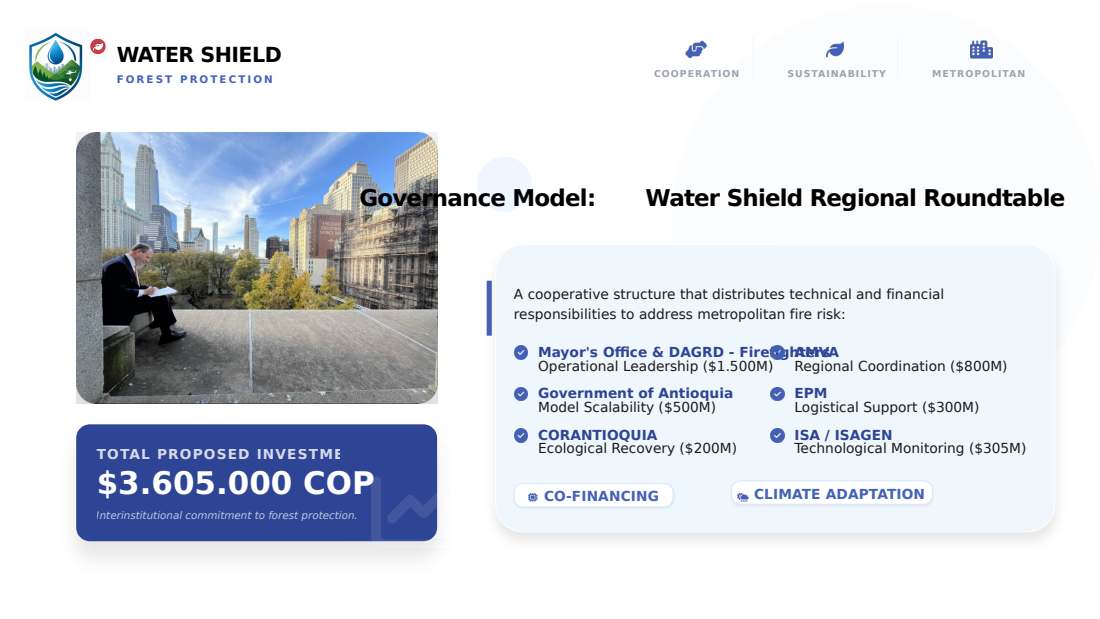
A cooperative structure that distributes technical and financial responsibilities for addressing metropolitan wildfire risk:
Medellín Mayor's Office & DAGRD-FirefightersOperational Leadership — $1.500M
$3.605.000 COP as written in the presentation.
Interinstitutional commitment to forest protection.
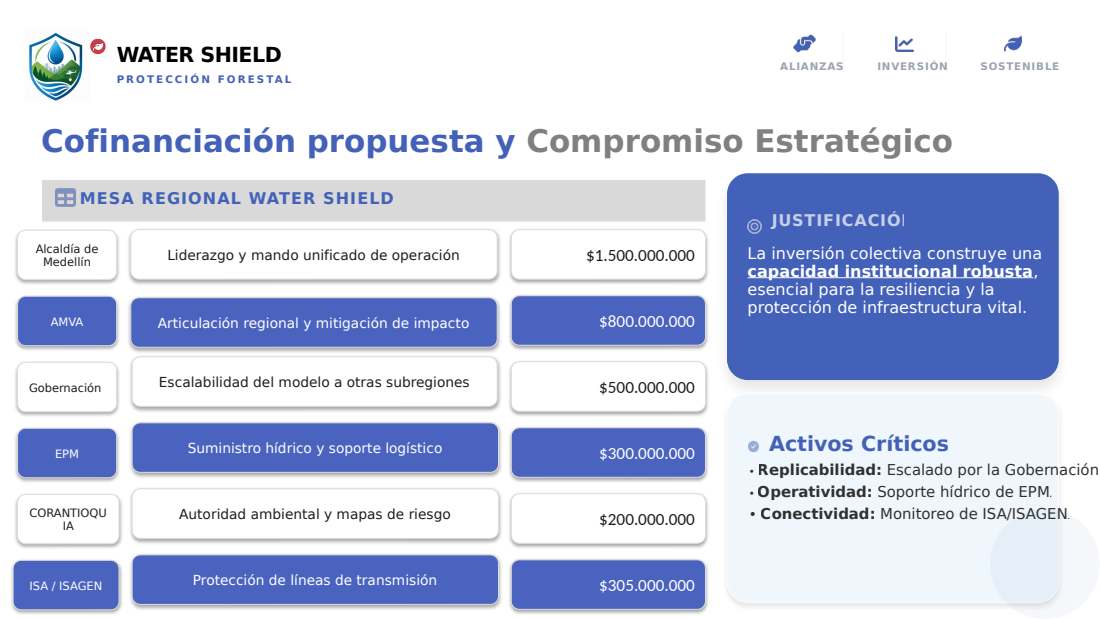
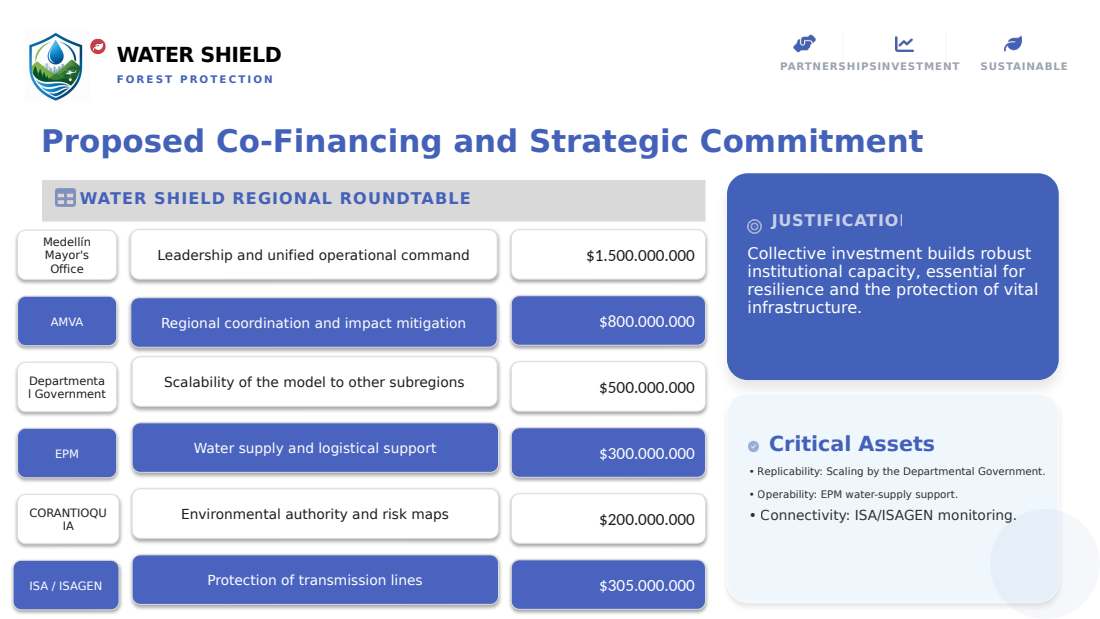
Collective investment builds robust institutional capacity, essential for resilience and the protection of vital infrastructure.
Replicability: Scaling by the Departmental Government.
Operability: EPM water-supply support.
Connectivity: ISA/ISAGEN monitoring.
Medellín Mayor's OfficeLeadership and unified operational command$1,500,000,000
Departmental GovernmentScalability of the model to other subregions$500,000,000
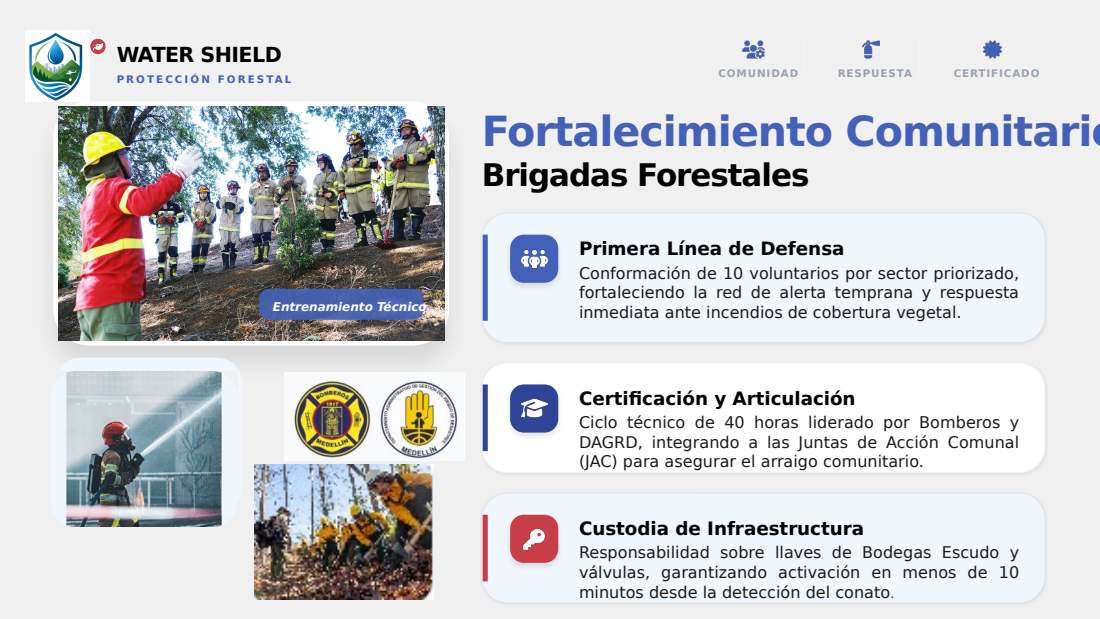
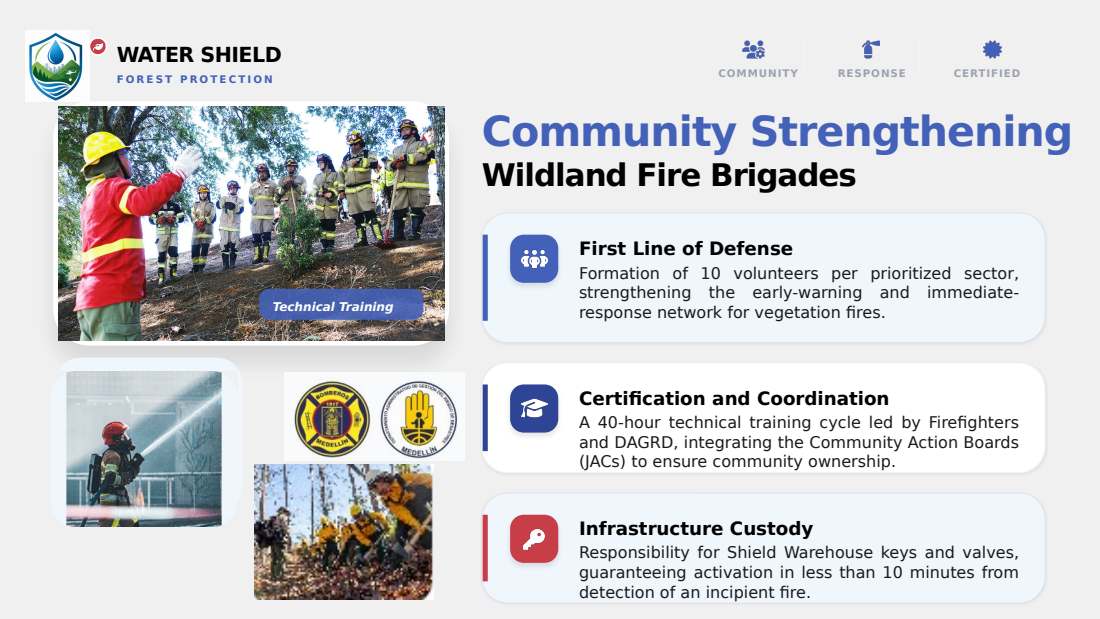
Formation of 10 volunteers per prioritized sector, strengthening the early-warning and immediate-response network for vegetation fires.
A 40-hour technical training cycle led by Firefighters and DAGRD, integrating the Community Action Boards (JACs) to ensure community ownership.
Responsibility for the keys to Shield Warehouses and valves, guaranteeing activation within less than 10 minutes from detection of an incipient fire.
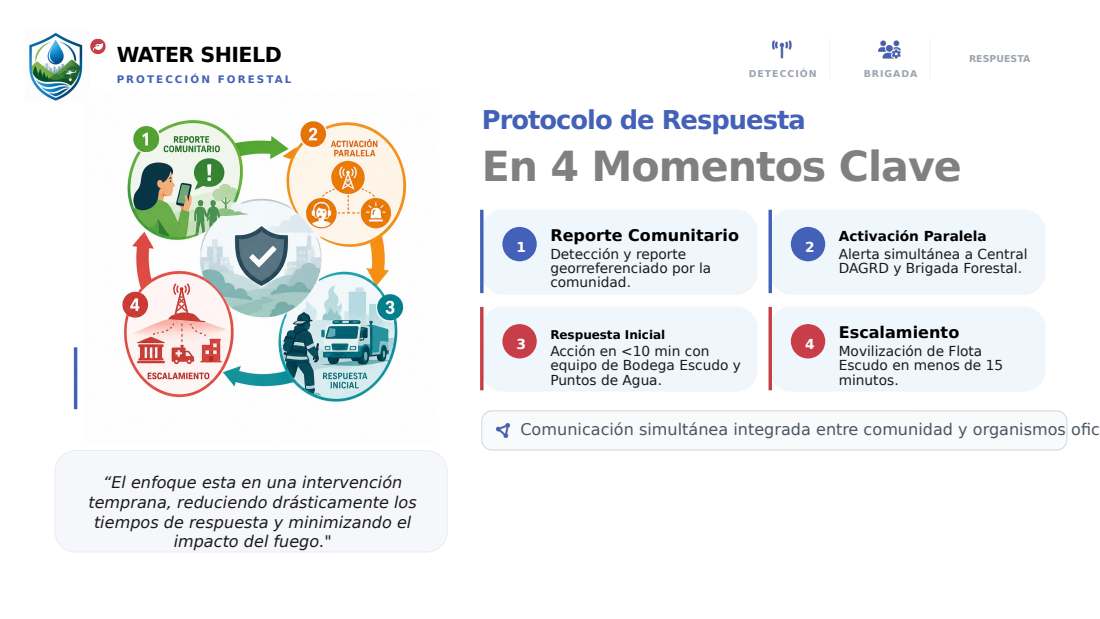
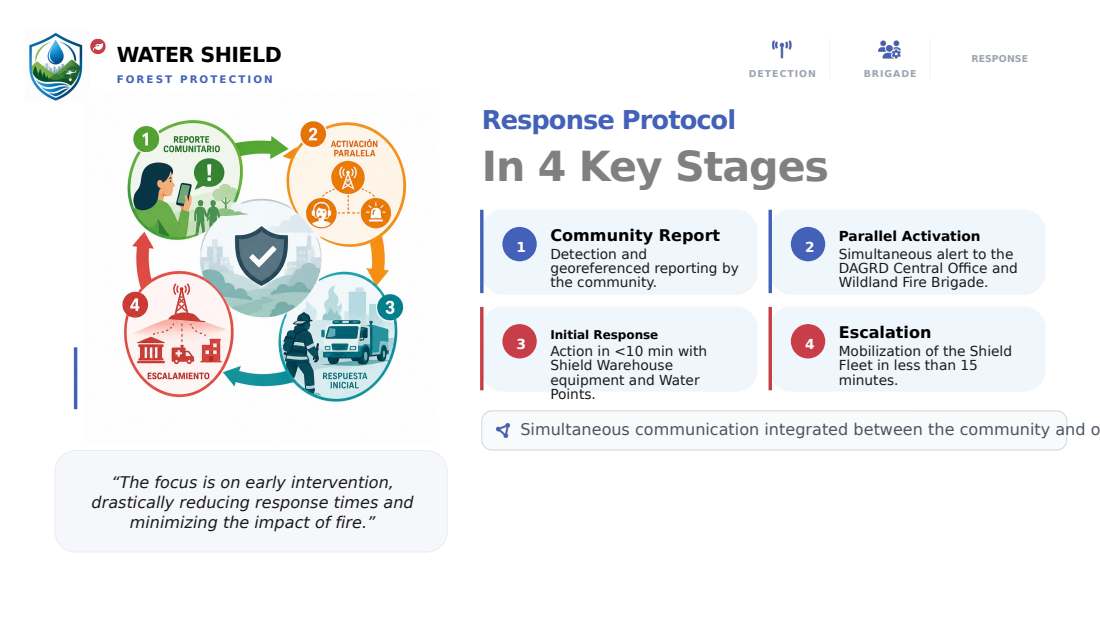
"The focus is on early intervention, drastically reducing response times and minimizing the impact of fire."
1. Community Report
Detection and georeferenced reporting by the community.
2. Parallel Activation
Simultaneous alert to the DAGRD Central Office and Wildland Fire Brigade.
3. Initial Response
Action in less than 10 minutes using Shield Warehouse equipment and Water Points.
4. Escalation
Mobilization of the Shield Fleet in less than 15 minutes.
Simultaneous communication integrated between the community and official agencies.
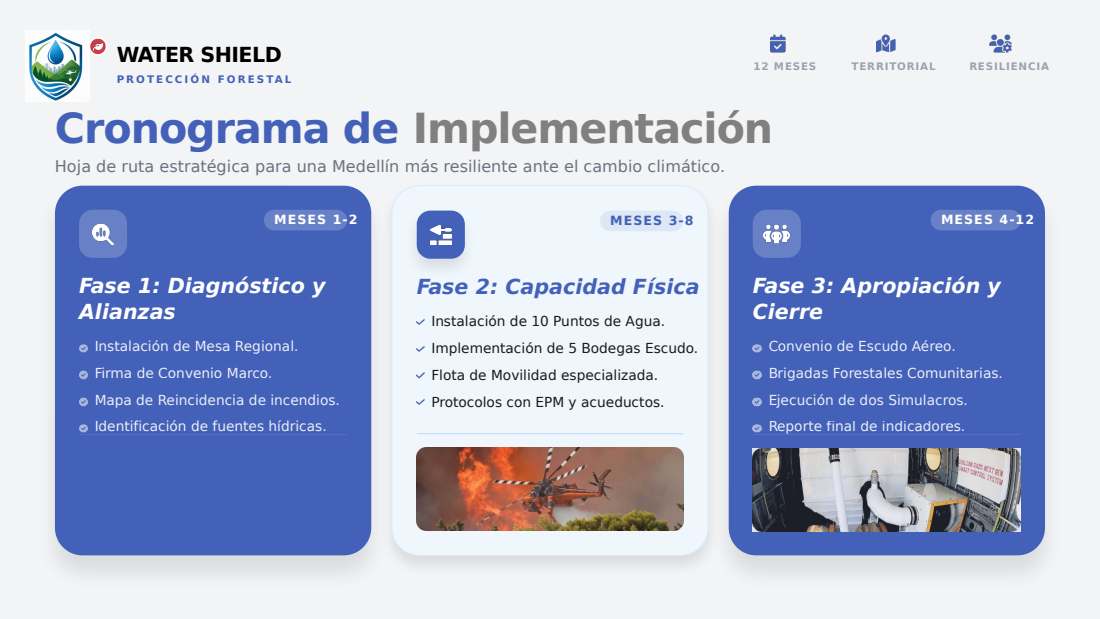
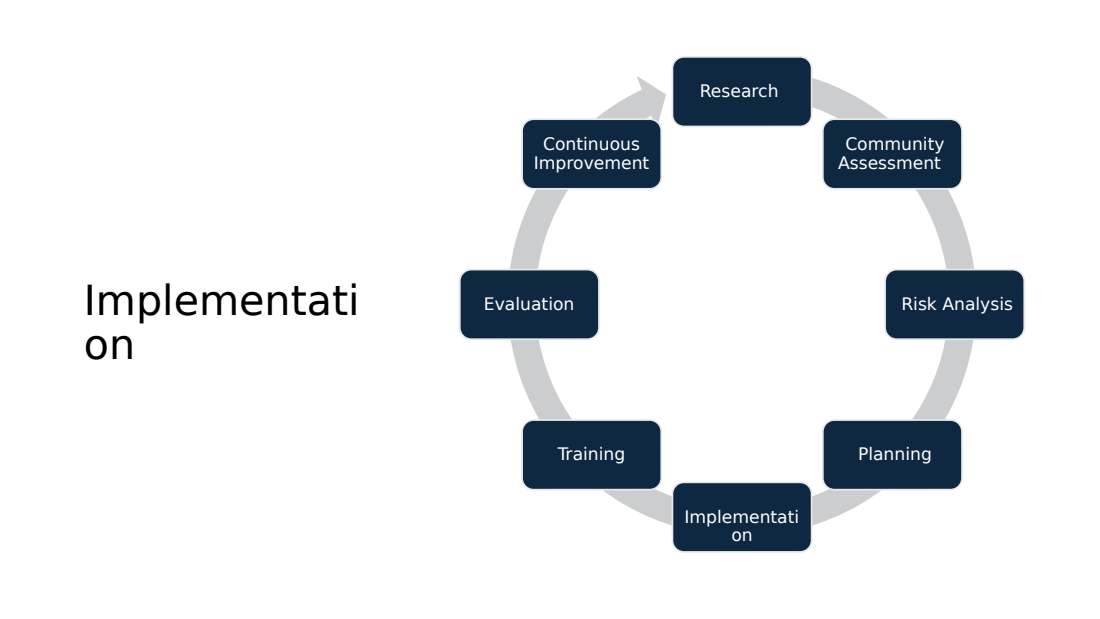
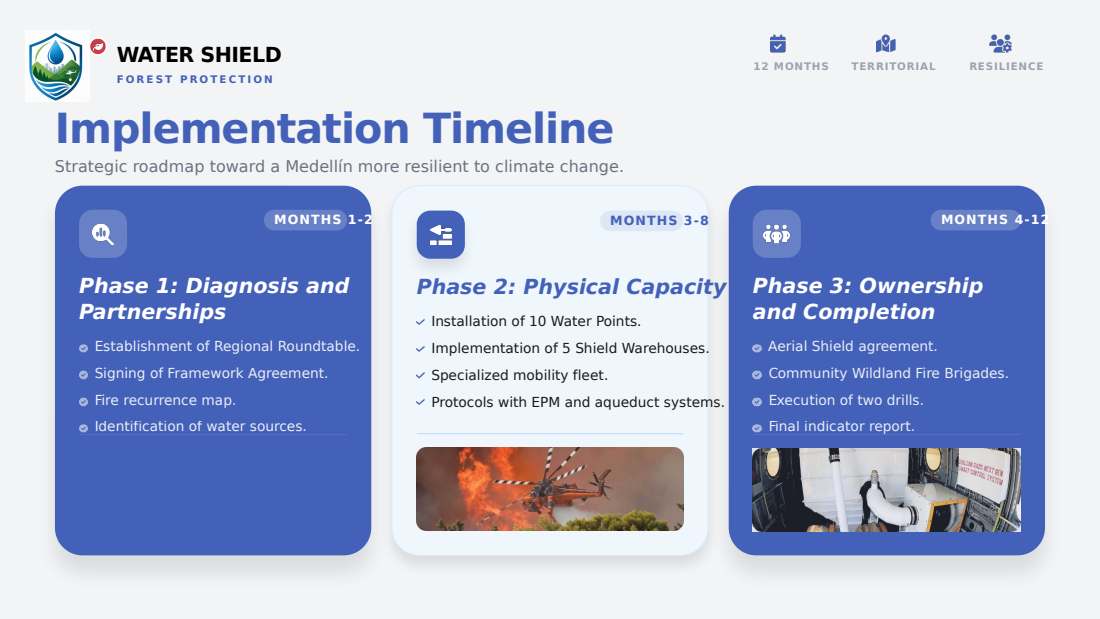
Strategic Roadmap Toward a Medellín More Resilient to Climate Change
Total implementation period: 12 months.
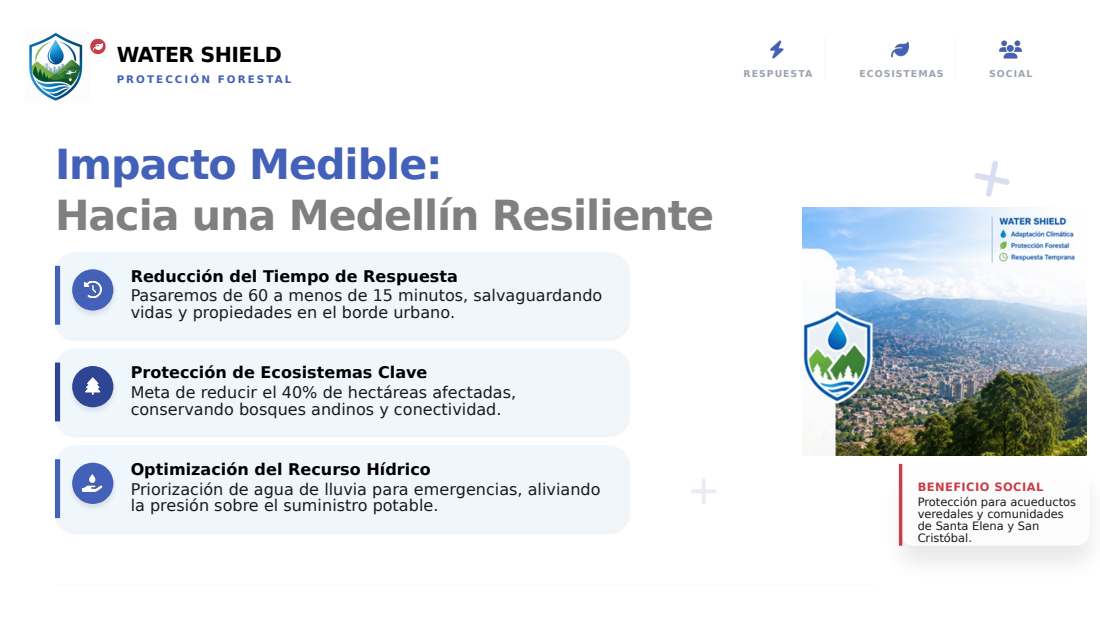
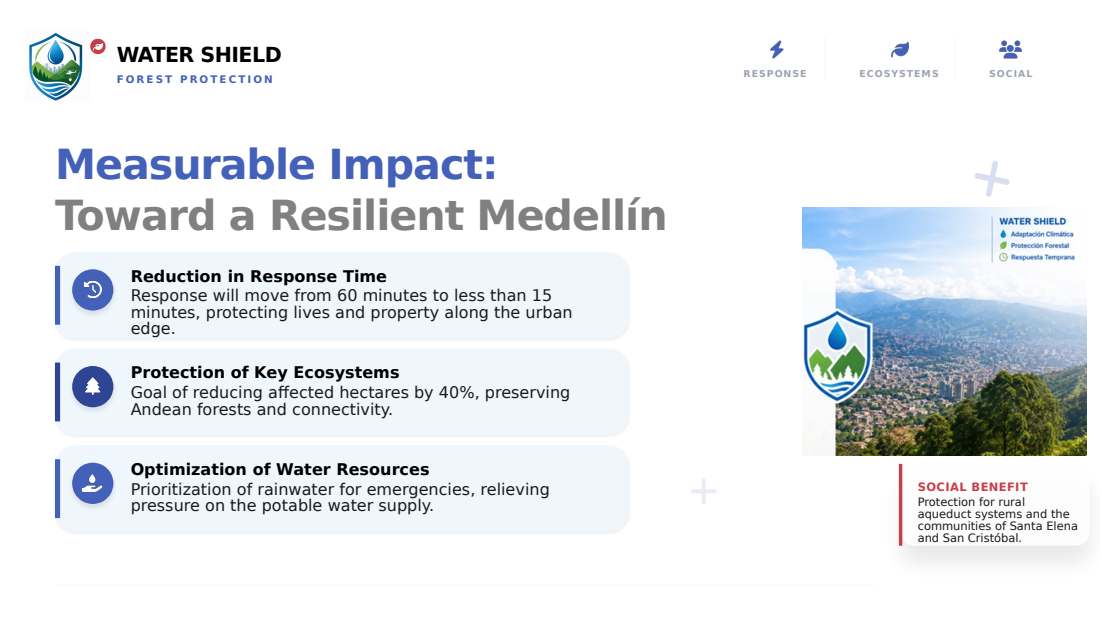
Response will move from 60 minutes to less than 15 minutes, protecting lives and property along the urban edge.
Goal of reducing affected hectares by 40%, preserving Andean forests and connectivity.
Prioritization of rainwater for emergencies, relieving pressure on the potable water supply.
Protection for rural aqueduct systems and the communities of Santa Elena and San Cristóbal.
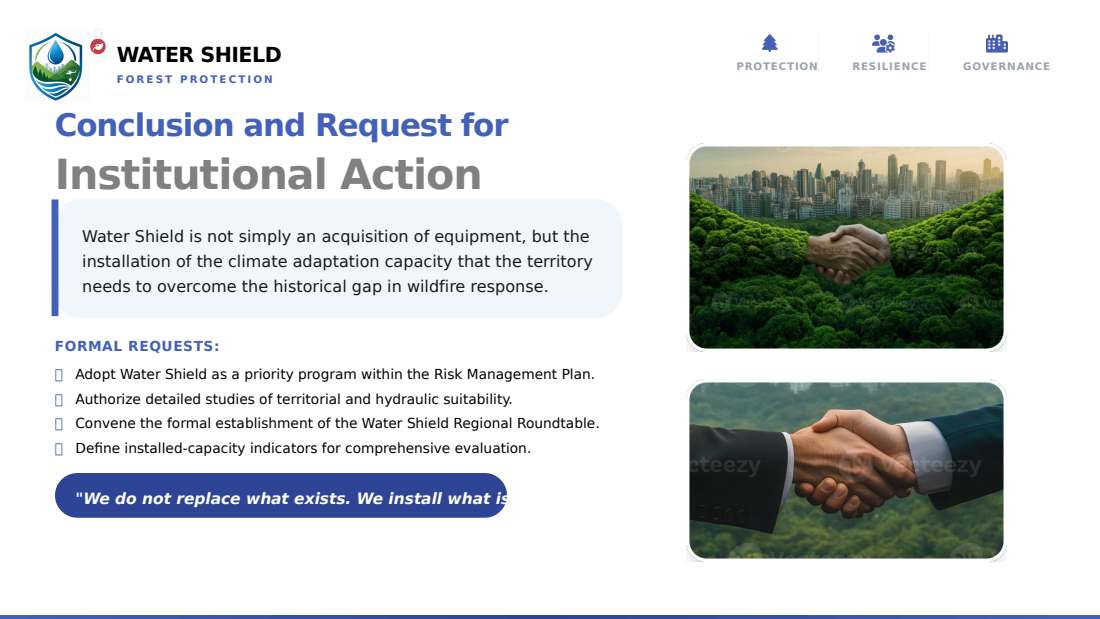
Water Shield is not simply an acquisition of equipment, but rather the installation of the climate adaptation capacity that the territory needs to overcome the historical gap in wildfire response.
✓ Adopt Water Shield as a priority program within the Risk Management Plan.
✓ Authorize detailed studies of territorial and hydraulic suitability.
✓ Convene the formal establishment of the Water Shield Regional Roundtable.
✓ Define installed-capacity indicators for comprehensive evaluation.
"We do not replace what exists. We install what is missing."
Program proposal
Program proposal